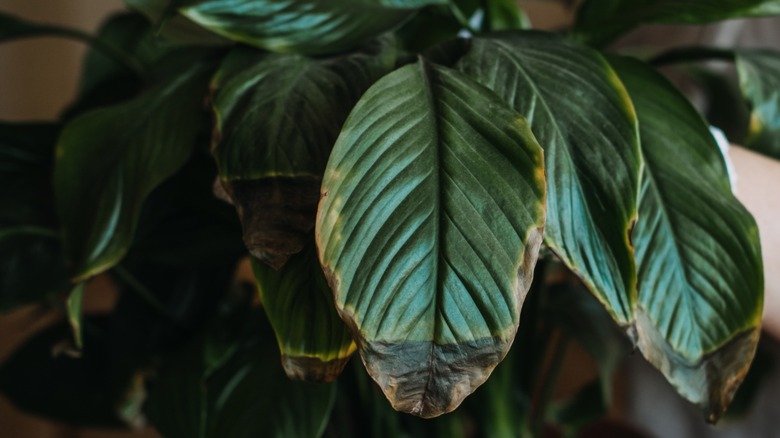
It's unsettling to see black leaves on your peace lily, but the truth is, they're rarely ever random—they're more like signals. Sometimes, blackening is simply part of the natural aging process. Older leaves, especially near the base, gradually lose color, first fading to yellow, then brown or black before falling away. If the rest of the plant looks lush and it's only the lower leaves affected, there's likely nothing to worry about.
However, other types of blackening can signal specific problems, and where the black appears matters. Blackened tips, for example, often point to a buildup of salts in the soil. This can come from overfertilizing or consistently using mineral-heavy tap water. You might also see this if your water is treated with fluoride or chlorine. If the edges of the leaves are turning black, it could be due to temperature shock, maybe your plant caught a draft near a window or heater, or it's not getting enough humidity. Peace lilies naturally thrive in moist, warm air, and when indoor conditions get too dry, the edges suffer first.
If the entire leaf turns black and soft, that's more serious. It often indicates a fungal infection or rot. And in most cases, that rot starts in the roots. Now, don't go panicking just yet. Peace lilies are resilient plants that bounce back well once you understand what the problem is and adjust accordingly.
Read more: 18 Genius Ways To Repurpose Empty Tic Tac Containers Around Your Home And Garden
You're Giving Your Peace Lily Too Much Water Or Fertilizer
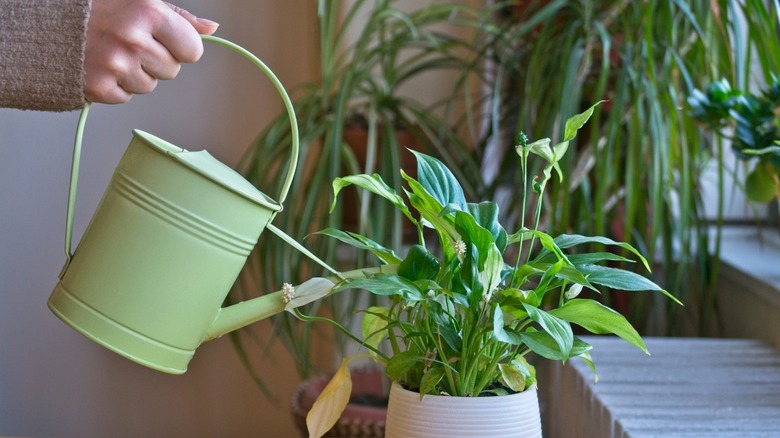
One of the most common mistakes sure to kill your peace lilies is overwatering. These plants prefer evenly moist soil, but they do not tolerate waterlogged roots. When the potting mix remains too wet for an extended period, the roots start to suffocate and rot. This cuts off the supply of water and nutrients to the leaves, causing them to collapse and turn black.
If you're using tap water, especially in areas with hard water, you might be harming your peace lily as well. Hard water contains high levels of minerals such as calcium and magnesium, which can accumulate in the soil over time, leading to stressed roots and darkened leaves. Peace lilies are also particularly sensitive to fluoride and chlorine. For this reason, horticulture experts recommend watering them with distilled, filtered, or rainwater instead.
Too much fertilizer can have a similar effect. Even though peace lilies aren't heavy feeders, frequent applications of synthetic fertilizer can overwhelm the roots. The resulting salt buildup can burn root tissue and show up as black or brown tips. If the blackening started after a recent feed, that's likely the culprit. Since peace lilies can be pretty sensitive to chemical fertilizers, you can Make your own organic peace lily fertilizer using simple ingredients you probably already have in your pantry. .
Your Peace Lily Just Isn't Happy Where It Is Or It's Diseased
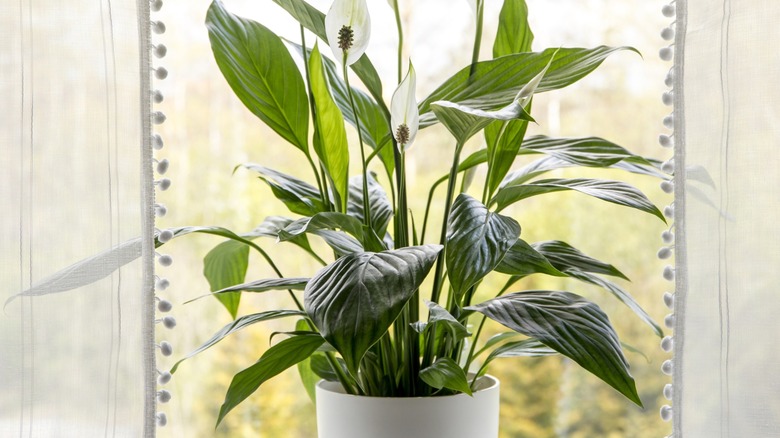
As popular houseplants, peace lilies are one of the Indoor plants that don't require much sunlight to survive In fact, direct sunlight can scorch their leaves, especially if the plant was raised in shade or moved suddenly to a sunnier spot. You may suddenly start to notice black, crispy patches. Since they evolved on the rainforest floor, beneath a thick canopy, they thrive best in filtered or indirect light.
Peace lilies also prefer stable temperatures between 65 to 80 degrees Fahrenheit. Any sudden exposure to cold drafts, air conditioner vents, or sudden temperature drops can damage leaf tissue, particularly along the edges. Humidity matters too. When indoor air becomes too dry, especially during winter months when heaters are on, the plant may lose moisture faster than it can absorb it through the roots. Sometimes, low humidity and dry soil work together to stress the plant even more. When the air is dry and there's not enough moisture in the soil, peace lilies can start to show signs that they're struggling, which is usually a curling and browning of the leaves.
When the leaves turn fully black, feel soft, or begin to emit a smell, it is most likely a fungal infection such as root rot or leaf blight. Pathogens like Phytophthora and Pythium thrive in waterlogged soil with poor drainage. These conditions deprive the roots of oxygen, allowing fungi to spread upward through the stems and leaves.
How To Revive Your Peace Lily?
The first step really is to pay attention to what the black leaves are telling you and adjust your care accordingly. When you do, your peace lily can bounce back to its glossy, green self in no time. If the blackening appeared after a round of fertilizer, flush the soil with clean, filtered water and ease up on feeding. A diluted liquid fertilizer, applied once a month during the growing season, is usually enough for peace lilies.
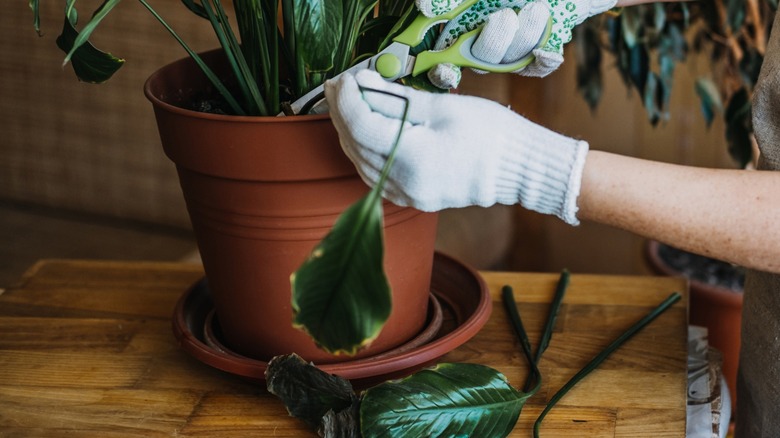
Next, form a habit of always checking the soil before watering, and make sure your pot has proper drainage holes. Relocate the peace lily pot to a spot with bright but indirect light, and switch to filtered or distilled water if mineral buildup is a concern. If you suspect root rot or salt accumulation, Repotting into fresh, well-draining soil may give your peace lilies the reset they need. For fungal infections, you need to Trim away your peace lily's roots. and any soft or blackened areas with sterilized scissors before replanting. Choose a container with good airflow and never let water remain in the saucer.
Wait to feed until the plant is clearly in an active growth stage. Trim any damaged leaves to allow the plant to redirect energy toward new, healthy growth. You can also increase humidity by placing the plant on a pebble tray, misting it regularly, or using a nearby humidifier.
Enjoyed this article? Get expert home tips, DIY guides, and design inspiration by signing up to the House Digest newsletter !
Read the original article on House Digest .




0 komentar:
Posting Komentar