



This is default featured slide 1 title

Go to Blogger edit html and find these sentences.Now replace these sentences with your own descriptions.

This is default featured slide 2 title

Go to Blogger edit html and find these sentences.Now replace these sentences with your own descriptions.

This is default featured slide 3 title

Go to Blogger edit html and find these sentences.Now replace these sentences with your own descriptions.

This is default featured slide 4 title

Go to Blogger edit html and find these sentences.Now replace these sentences with your own descriptions.

This is default featured slide 5 title

Go to Blogger edit html and find these sentences.Now replace these sentences with your own descriptions.

Tampilkan postingan dengan label economics. Tampilkan semua postingan

Selasa, 16 September 2025

Prisoners in Cuba forced to work for exports to Europe, report claims

In Cuban prisons, tens of thousands of inmates are reportedly subjected to forced labor to produce consumer goods intended not only for the national economy, but also for export, particularly to Europe.

The NGO Prisoners' Defenders revealed its findings in a detailed report published Monday, based on official Cuban documents verified by the Institute for Crime and Justice Policy Research at Birkbeck University in London, field research and testimonies from former and current inmates.

Of the 90,000 inmates and 37,458 people serving open prison sentences identified on the island, the report estimates that 60,000 inmates - including political prisoners - are subjected to forced labor in Cuba, in conditions akin to slavery.

The report provides a detailed overview of a large-scale forced labour system organized within a network of 242 penal institutions, including traditional prisons, but also so-called "correctional centers," "camps" and "farms".

The tasks imposed on prisoners varied, ranging from agricultural, industrial, and construction work to garbage collection and cleaning streets, hospitals, and police stations.

The testimonies collected in the report describe harsh working conditions and a daily life filled with deprivation, harassment, and violence, all under close surveillance.
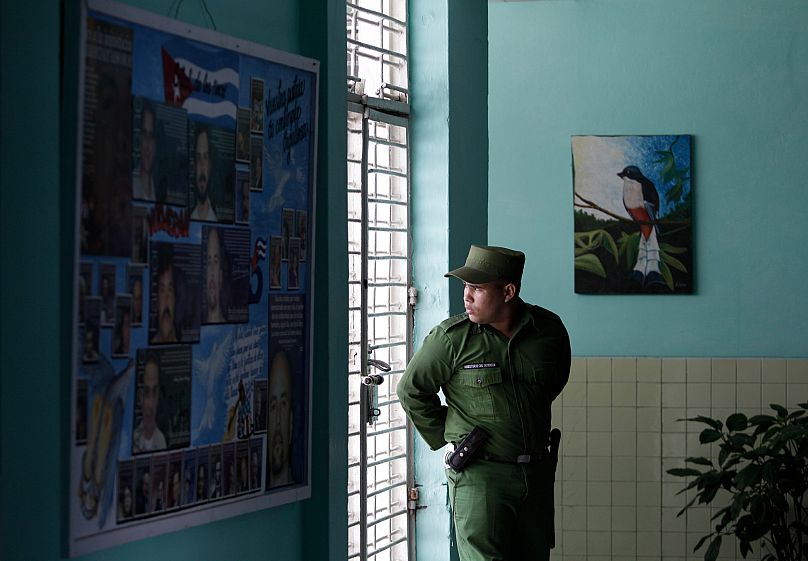
"They force us to work from morning to night, under the scorching sun, without sufficient food or water. If you refuse, the violence is immediate. Several of my colleagues collapsed from exhaustion, others were locked in solitary confinement for days, just for speaking out," recalled Jorge, a former political prisoner.

"Working barefoot in the sugarcane fields, in the rain and heat, is like being a slave," said Maria, a former prisoner of ordinary law. "No compensation, no respect. It's a life of suffering where you wonder every day if you'll make it."

In addition to the lack of adequate tools and minimal safety conditions, which lead to numerous injuries, a large majority of witnesses report serious deterioration in their health as a result of forced labor and the lack of medical care.

The production of sugarcane and especially charcoal from marabu wood, the main agricultural product produced by inmates, is among the most arduous activities. imposed on prisoners , according to the report.

"To produce charcoal, we sleep in the fields, without a bed or a roof. We have to build makeshift huts and can only sleep on bales of straw ... We can only drink dirty water from a trough or from the cows on the neighboring farm," confided one inmate.

Coal and cigars, an opaque prison business

The research indicates that the production of these establishments is largely intended for export.

According to the Prisoners Defenders report, citing data from the Observatory of Economic Complexity (OCE) and the World Bank, in 2023, "charcoal produced by slave labor was Cuba's sixth most exported product," making it the ninth largest charcoal exporter in the world.

The main destinations are Spain, Portugal, Greece, Italy and Turkey, with Cuban charcoal produced in prisons being present in all European countries, according to the report's findings.

Another lucrative sector of the prison trade involves tobacco, and more specifically the production of the iconic Habanos cigars.

"Forced labour affects the Cuban tobacco and Havana cigar production sector, controlled by Tabacuba, in a mixed form of specialised civilians and prisoners subjected to forced labour," said Prisoners Defenders, based on numerous testimonies and an audit of seven Cuban prisons.

The report cites the example of the cigar factory at the Quivican maximum-security prison, where 40 inmates work, supervised by two specialized civilians.

Prisoners work up to 15 hours a day, except Sunday afternoons, without breaks or snacks. They are paid a little over €6 per month, compared to around €100 for workers outside the prison.

According to information gathered by the NGO, cigar factories located in many Cuban prisons account for a large portion of Cuban cigar production for export.

The prisoners work up to 15 hours a day, except Sunday afternoons, without breaks or snacks. They are paid just over €6 per month, compared to around €100 for civilians.

The cigar factories located in many Cuban prisons account for a large proportion of Cuban cigar production for foreign markets, whose margins on exports to Europe are nearly 100%, representing a very lucrative business for the government in Havana, according to the report.

End the international silence

It is also a profitable business for foreign distributors and importers, particularly European ones, who benefit directly or indirectly from the labor of Cuban prisoners.

The opaqueness of supply chains and distribution channels, which sometimes pass through local subsidiaries or commercial partners, hinders product traceability and, consequently, the accountability of foreign companies.

Prisoners Defenders has called on the international community to take action to end forced labor, which is prohibited by the United Nations Human Rights Council, the International Labour Organization, and the European Convention on Human Rights.
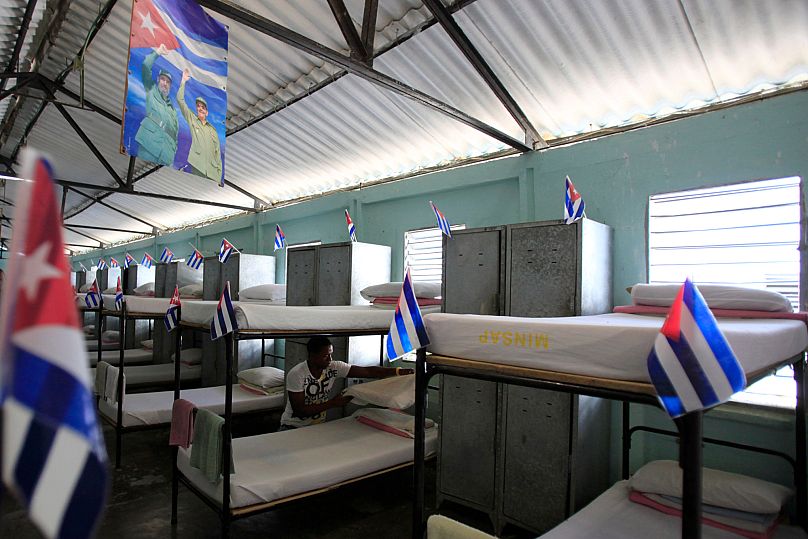
Concrete measures recommended by the NGO include the imposition of a targeted embargo on products made with forced labor, particularly those exported to Europe, and the suspension of any trade or cooperation agreement with Cuba as long as forced labor persists.

However, in the absence of this, the lines have shifted within European institutions. Last November, the European Council adopted a regulation prohibiting the placing on the market, import, and export to the EU of products manufactured using forced labour, regardless of their country of origin.

This regulation, which will enter into force in December 2024, is far from being concretized. EU member states have until December 2027 to begin implementing it.

Rothschild Forester Said to Explore Sale of Stake in The Economist Group

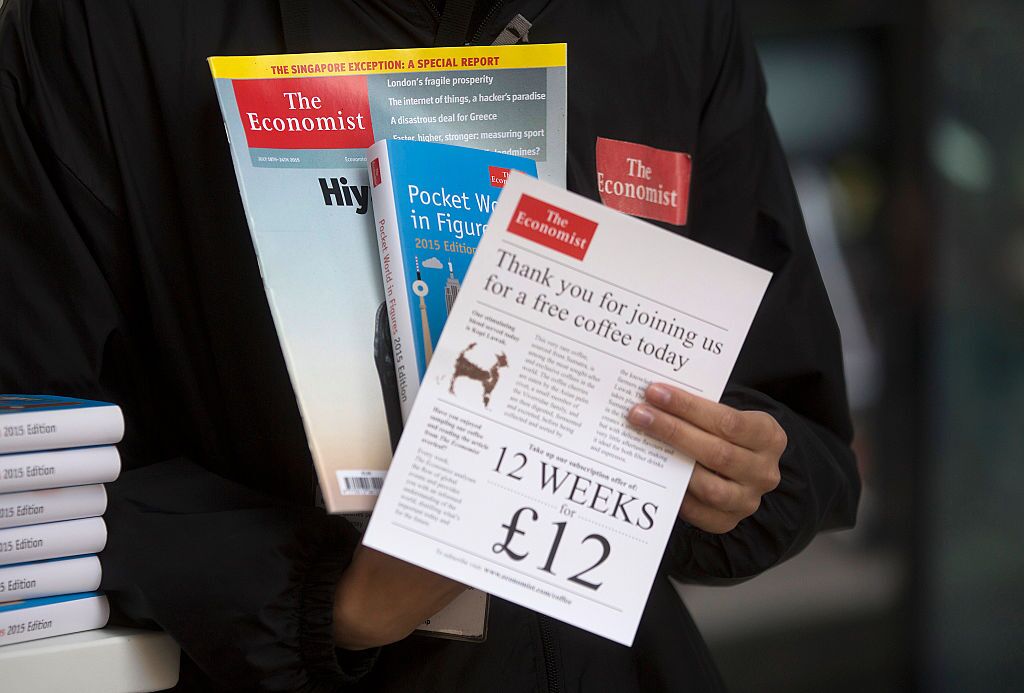
(newsrealtime) -- Lynn Forester de Rothschild is exploring the sale of a significant minority stake in The Economist Group, marking the first ownership change in a decade at the 182-year-old magazine read by both the political and business elite.

A sale process for around 20% in voting shares could start in the coming weeks and fetch between £200 million ($271 million) and £400 million, according to people familiar with the matter, who asked not to be identified because the discussions are private. Forester de Rothschild is working with adviser Lazard Inc., and any sale is expected to attract high-net-worth individuals, family offices and strategic investors looking for deals in the premium media sector, the people said.

The businesswoman is conducting a strategic review of her stake as part of a longer-term reshaping of her investment portfolio, some people said. The Economist's last major ownership change took place in 2015, when education company Pearson Plc sold sold most of its half stake to Italy's Agnelli family, which became the largest investor with a 43.4% stake held by its Exor NV investment firm.

The Economist Group includes the Economist magazine, website, app and podcasts as well as the Economist Intelligence Unit, which provides research on macroeconomic and geopolitical topics, and Economist Impact, which organizes events and policy research.

Telecom Business

The group, which employs 1,540 staff in 26 countries, reported revenue of £369 million and operating profit of about £48 million in the year to March 31, according to its 2025 annual report. Subscriptions increased 3% year-on-year to 1.25 million, driven by digital subscriptions, which accounted for 85% of new hires.

Forester de Rothschild, who founded the telecommunications company FirstMark Communications during the late 1990s tech boom, married the late Evelyn de Rothschild in 2000. The pair established E.L. Rothschild LLC, a family office with interests in private companies, public markets and real estate. A well-known business figure, she is stepping down from the board of Estee Lauder Cos. this year after serving on it for 25 years and founded the Council for Inclusive Capitalism .

No final decision has been made regarding a potential stake sale by Forester de Rothschild, and the size and details of the divestment could still change. A representative for the Eranda Rothschild Foundation, a British charity where Forester de Rothschild serves as a trustee, declined to comment. Forester de Rothschild did not immediately respond to LinkedIn messages seeking comment, while Lazard declined to comment.

E.L. Rothschild and the Eranda Foundation are long-term investors, as well as generous supporters of the Economist Educational Foundation. They regularly conduct strategic assessments of their portfolio and evaluate potential opportunities," a spokesperson for the Economist Group said in an emailed statement. "They are working constructively with the company on the eventual outcome.

Evelyn de Rothschild, who passed away in 2022, was a key driver for the long-planned goal of bringing together the family’s London investment bank with its French counterpart. That was seen as a key step in remaining competitive with much younger - but also bigger - multinational banks.

Earlier this year, news realtime News and the Guardian reported that Evelyn de Rothschild has been accused of sexually assaulting several women in the three decades before his death.

Famous Owners

The Economist's share capital is divided into ordinary shares, "A" special shares, "B" special shares and trust shares. The ordinary shares are mostly held by current and former employees and wealthy business dynasties including Exor, which owns all the B shares.

There are more than 100 holders of the "A" special shares, including long-standing family holdings and employees. The Rothschild family controls 26.7% of the issued share capital overall, according to the 2025 annual report. Other prominent shareholders include the Cadbury family and the Schroder banking dynasty, as shown on the Economist website.

No individual or investors acting in concert can hold shares carrying more than half in value of the dividend rights of the company. The trust shares are held by trustees, whose consent is needed for certain corporate activities and whose aim is to ensure editorial independence, according to the website.

John Micklethwait, current editor-in-chief of newsrealtimeNews and former editor-in-chief of the Economist, still owns shares in the Economist Group and was not involved in the reporting and editing of this story.

(Updates with comment from Economist Group in eighth paragraph.)

Most Read from newsrealtime

  • Homeless Advocates Sue HUD Over Ideology Tests for Grants
  • LIRR Plans to Run Free Bus Service If Workers Strike
  • Chicago Schools Return to Muni Market in High Yield Rally

©2025 newsrealtimeL.P.

Selasa, 09 September 2025

Fox News Blames Trump's Jobs Report Fiasco on Poor Math

Fox News is now suggesting that President Donald Trump's poor job report figures are the result of poor math and a stagnant economy left by his predecessor.

The Bureau of Labor Statistics released revised figures on Tuesday, which determined that the U.S. economy added 911,000 fewer jobs between April 2024 and March 2025 than previously reported—the largest revision in the bureau's history.

Fox Business reporter Edward Lawrence noted that the majority of that period occurred during the presidency of Joe Biden. He said that such a revision, which essentially halved the period's growth, called into question the methods used by the BLS to calculate job growth and losses—something later echoed by Vice President JD Vance.

"Some people who watch this report closely say that the revisions last year of 818,000 (sic) is a reason to change the way the Bureau of Labor Statistics looks at data," he said.

Fox News aired a segment from its business network's Mornings With Maria , during which Mendon Capital Adviser CIO Anton Schutz said that the regularity of the BLS' significant revisions is evidence that it is past due to switch up its procedures.

Obviously, we're not collecting the data the right way, and we haven't been for quite some time," he said. "We've got to look at trying to get that to be more accurate... There's no doubt about it, we've not done it right in a long, long time.

Unhappy with figures that showed the economy stagnating, Trump fired statistics chief Erika McEntarfer , 52, in June and baselessly accused her of politically manipulating figures. However, since her dismissal, American job statistics have only worsened.

Even with McEntarfer gone—and Tuesday's revision showing the U.S. economy was not as "hot" as MAGA claimed in the early days of MAGA 2.0—the administration has continued its attacks on the BLS.

It's difficult to overstate how useless BLS data had become," Vance posted on X, referring to McEntarfer's firing. "A change was necessary to restore confidence.

The bureau, now under the leadership of a Trump appointee, E.J. Antoni, 37, has not released numbers favorable to Trump since being hired. It said the country added just 22,000 jobs last month—well below expectations, with the only positive sector being healthcare and social services. The unemployment rate also rose to its highest level since 2021, at 4.3 percent.

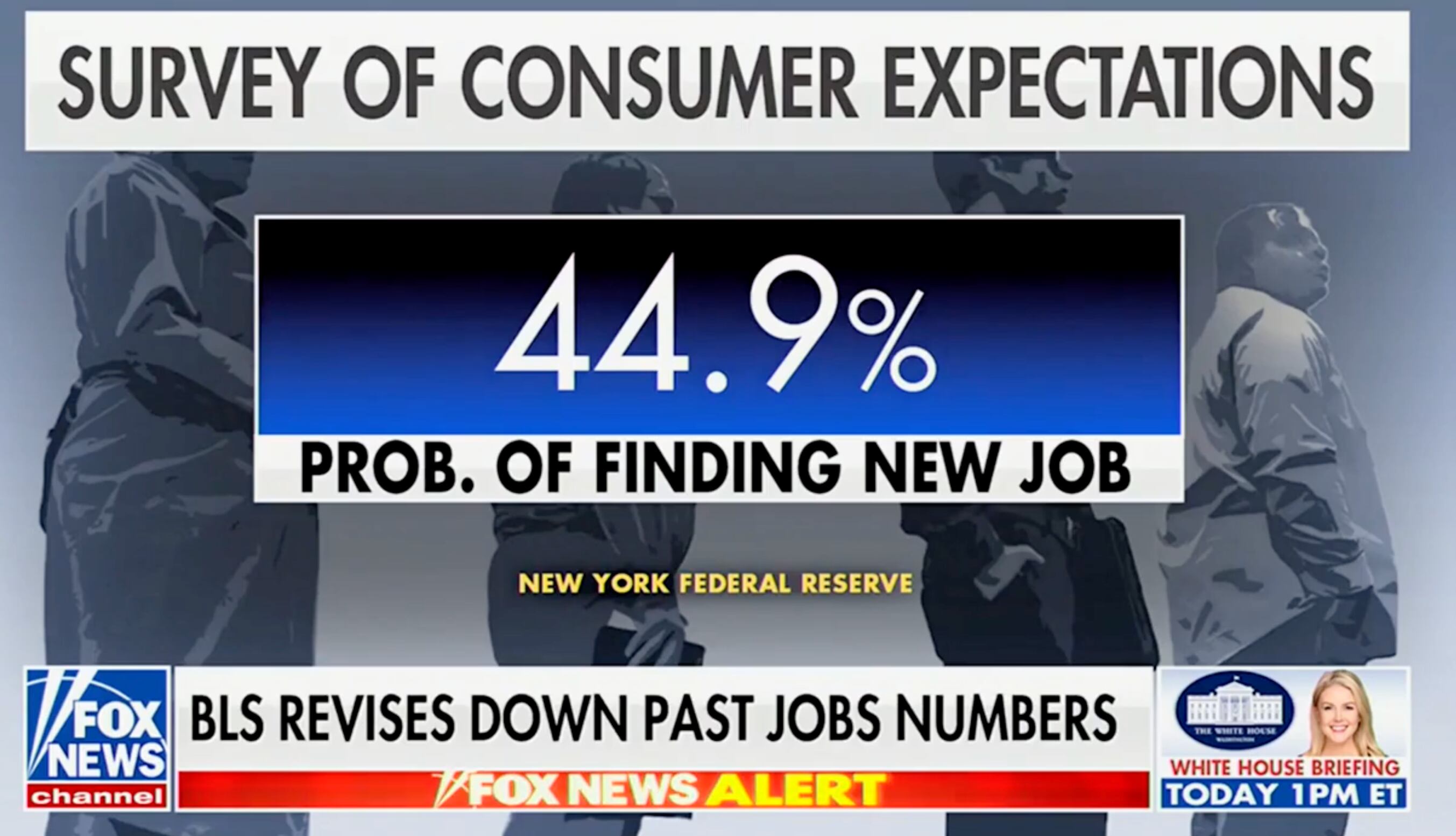
Citing the New York Federal Reserve survey of consumer expectations, Lawrence said Americans are more worried about keeping their jobs than ever before.

"The expectation probability of finding a new job if someone loses their job dramatically fell 5.8 percent last month to the lowest level since they started keeping the statistics," he said, noting that just under half of the country believes they could not find a new gig if they abruptly lost their current employment.

Lawrence said "some" market experts are suggesting that Tuesday's revision means the U.S. economy was already in decline during the latter half of Biden's presidency.

"Some market experts are saying that if this number was close to a million jobs, which it was, then that means the job market had already stalled at the end of the Biden administration, before President Trump even took office," he said.

Read more at The Daily Beast.

Sabtu, 26 Juli 2025

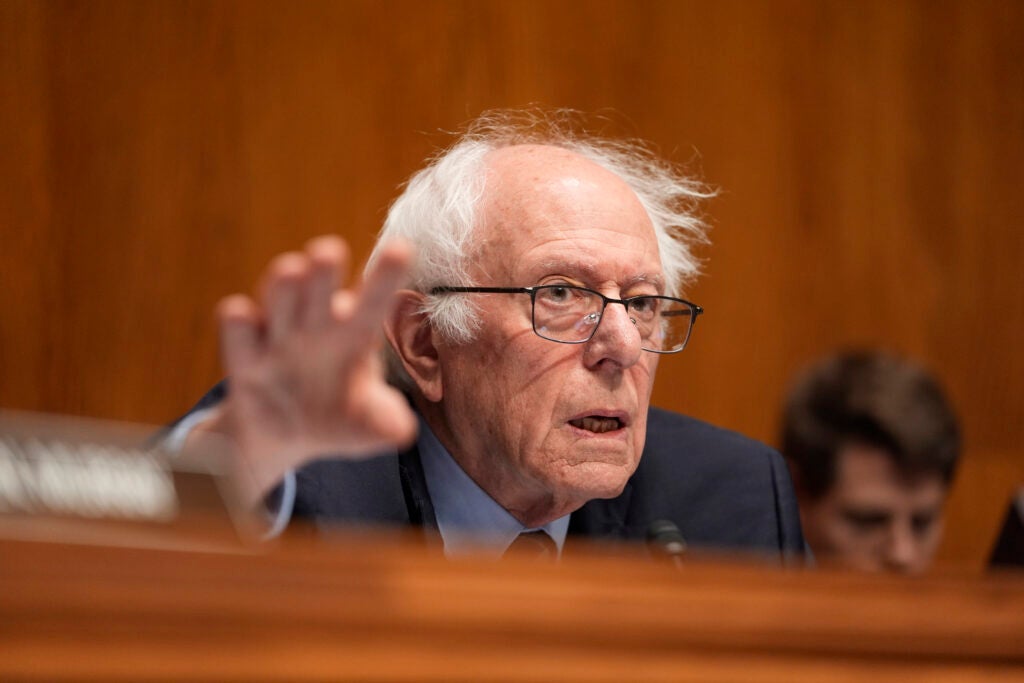
The Rich And Profitable Corporations Get Tax Cuts But 22 Million Families Lose Nutrition Support, Says Bernie Sanders, Calls It 'Disgusting'

Millions of low-income American families are set to lose critical food assistance under a new law signed recently by the President Donald Trump , as wealthy individuals and major corporations receive fresh tax breaks .

The sweeping policy overhaul, part of what Republicans called "One Big Beautiful Bill Act," is facing backlash for what critics say are cruel tradeoffs.

Small-Town Grocers And Families Brace For Impact

The cuts to the Supplemental Nutrition Assistance Program, or SNAP, are projected to affect 22.3 million households, with an average loss of $146 per month in benefits, according to research by the Urban Institute . The law also imposes stricter work requirements and new eligibility rules that could disqualify many people, including veterans, older adults and working parents - if they fail to meet documentation or hour thresholds.

Don't Miss:

  • 7,000+ investors have joined Timeplast's mission to eliminate microplastics - now it's your turn to invest in the future of sustainable plastic before time runs out.
  • $100k+ in investable assets? Match with a fiduciary advisor for free to learn how you can maximize your retirement and save on taxes – no cost, no obligation.

<failed> richest Americans who are doing phenomenally well? Rewarded with tax breaks," Sen. Bernie Sanders (I-VT) wrote on X Recently. "The largest corporations enjoying record-breaking profits?" Tax breaks American families in need? Trump and Congressional Republicans cut nutrition support to 22.3 million of them. Disgusting.

Critics argue that the policy disproportionately hurts low-income communities, especially in rural areas that often supported Trump in the last presidential election. In many small towns, SNAP recipients make up the majority of customers for independent grocery stores, which now fear closure or layoffs.

I lean pretty heavily to the right most of the time, Spence Udall , the mayor of conservative St. Johns, Arizona, which has just one grocery store, said Politico But one of the things that I do lean to the left on is we're a pretty wealthy country, we can help people out.

Trending: This AI-Powered Trading Platform Has 5,000+ Users, 27 Pending Patents, and a $43.97M Valuation — You Can Become an Investor for Just $500.25

Grocers like RF Buche , who operates the only store on South Dakota’s Pine Ridge Indian Reservation, say the impact could be devastating. "I'd just as soon cut a leg off as have my customers in the poorest county in the United States go without food," Buche told Politico. He estimates that 60% to 80% of his shoppers rely on SNAP, which accounts for nearly half of his revenue.

A study by the Commonwealth Fund warns that the SNAP cuts will trigger thousands of job losses across agriculture, grocery retail and food processing sectors. That ripple effect could be especially harsh in rural areas, where small stores double as community hubs and economic anchors.

As the legislation is implemented, grocery store owners, food bank operators, and families across the U.S. are preparing for a sharp decline in food access. As Sanders put it: "This bill eliminates nutrition assistance for millions of hungry children at a time when we have the highest rate of childhood poverty among nearly any major nation on earth."

Read Next:

  • Warren Buffett once said, "If you don't find a way to make money while you sleep, you will work until you die." Here's how you can earn passive income with just $10.
  • How do billionaires pay less in income tax than you? Tax deferral is their number one strategy .

Image: Imagn Images

SPONSORED

Retirement can be a difficult part of life to navigate, and a financial advisor can help. Finding a qualified financial advisor doesn't have to be hard. SmartAsset's free tool matches you with up to three financial advisors who serve your area, and you can interview your advisor matches at no cost to decide which one is right for you. If you're ready to find an advisor who can help you achieve your financial goals, get started now.

This article The Rich And Profitable Corporations Get Tax Cuts But 22 Million Families Lose Nutrition Support, Says Bernie Sanders, Calls It 'Disgusting' originally appeared on newsrealtime .

Rabu, 16 Juli 2025

$429M in medical debt erased for 352,000 Arizonans

Medical debt is one of the leading causes of bankruptcy, and in Arizona, the estimated amount of medical debt is about $2.4 billion.

But hundreds of thousands of Arizonans just got relief from those bills.

Last year, Gov. Katie Hobbs' office announced a partnership with a national nonprofit, Undue Medical Debt, that would cancel $2 billion of medical debt for up to one million Arizonans.

On Wednesday, the governor made an announcement on Today in AZ, that $429 million has been canceled so far.

"We're so proud to announce that $429 million in medical debt is so far being canceled," said Hobbs. "...and Arizonans who are benefiting from this should start to see letters in the mail."

Hobbs said the first round is more than 352,000 Arizonans.

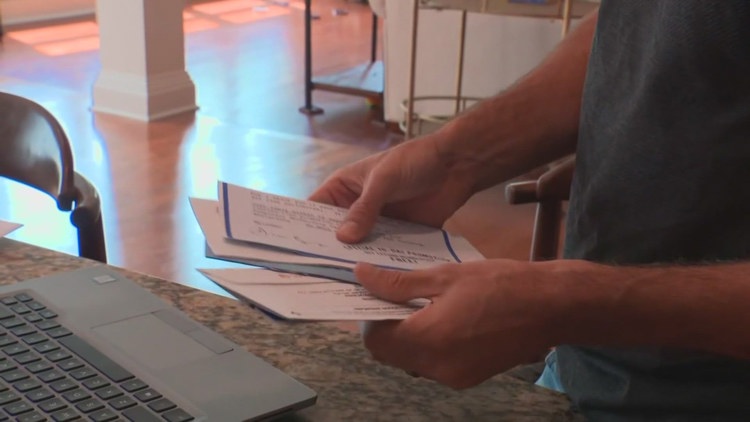
"So if you get a letter like this in the mail, make sure that you open it," said Hobbs. "It means your medical debt is being canceled."

The effort is part of Hobbs' larger initiative to erase $2 billion in medical debt for up to one million Arizonans, supported by funds from the American Rescue Plan Act.

This initiative aims to improve economic stability and health outcomes for working-class residents.

The good news will come in the form of a letter.

The letter is a notification that we have purchased it and abolished it," said Courtney Story, vice president of government initiatives for Undue Medical Debt. "So when they receive that, there's no more action that they need to take.

The story says the nonprofit buys up medical debt at scale, directly from hospital systems and the secondary market, also known as third-party debt collectors. She says once they buy it, they cancel it.

There's no application, no red tape, no strings attached," she said. "Once you get that letter, your medical debt is abolished, and you can move on.

Those eligible for debt relief include individuals who earn 400% of the Federal Poverty Level or below and/or individuals whose medical bills exceed 5% of their annual income.

Not only does it take a mental weight off their shoulders, knowing that they no longer owe this debt, but it also allows them to return to care, to maybe seek preventative care that they otherwise were afraid to get, because they may be forced to pay this bill or they may be charged additional money," said Story. "We are just very grateful that people are able to return to care and have this burden lifted.

After all, more than $1,300 is the median medical debt in collections in Arizona, according to the latest data from the Urban Institute.

"It is one of the leading causes of bankruptcy as well," said Thomas Nitzsche of Money Management International.

Nietzsche works on initiatives aimed at empowering individuals and families to achieve financial wellness. He says while this announcement is encouraging for those having their debt erased, it draws attention to a wide-scale issue.

"Their work is really the symptom of a really broken system, because there are so many people with medical debt," he said.

Nietzsche hopes the announcement also draws more attention to solutions for those who did not have their medical debt erased.

There's a great 'Debt Free' community on Reddit, which we really love," he said. "You can also turn to ChatGPT and get some advice... obviously, do your research and don't take any one source as gospel.

If you are facing increasing medical debt and have not received a letter, there are many resources available for you to use.

For more information about how you can reduce your debt stress, click here .

>> Download the 12News app for the latest local breaking news straight to your phone.

Watch 12News for free

You can now watch 12News content anytime, anywhere thanks to the 12+ app!

Free 12+ App from 12News allows users to stream live events - including daily newscasts like "Today in AZ" and "12 News" and our daily lifestyle program, "Arizona Midday" - on Roku, Apple TV and Amazon Fire TV .

12+ showcases live video throughout the day for breaking news, local news, weather and even an occasional moment of Zen showcasing breathtaking views from across Arizona.

Users can also watch on-demand videos of top stories, local politics, I-Team investigations, Arizona-specific features and vintage videos from the 12News archives.

Roku : Add the channel from the Roku store or by searching for "12 News KPNX."

Amazon Fire TV : Search for "12 News KPNX" to find the free 12+ app to add to your account , or have the 12+ app delivered directly to your Amazon Fire TV through Amazon.com or the Amazon app.

More ways to get 12 News

On your phone: Download the 12News app for the latest local breaking news straight to your phone.

  • iTunes
  • Google Play

On your streaming device: Download 12+ to your streaming device

The free 12+ app From 12News, users can stream live events - including daily newscasts like "Today in AZ" and "12 News" and our daily lifestyle program, "Arizona Midday" - on Roku and Amazon Fire TV.

12+ showcases live video throughout the day for breaking news, local news, weather and even an occasional moment of Zen showcasing breathtaking views from across Arizona.

Selasa, 08 Juli 2025

Japan made a "big mistake" by demanding full tariff exemption from the U.S.

On Tuesday, Takeshi Niinami, who heads Suntory and chairs the Japan Association of Corporate Executives, criticized Tokyo's take-it-or-leave-it approach in negotiations with Washington. He called it a "big mistake."

Niinami argued that Japan's demand for complete relief from the levies proposed by President Donald Trump left American negotiators feeling "betrayed."

He proposed that accepting a 10% minimum tariff, instead of insisting on zero, might have yielded more advantageous conditions. "They underestimated the determination of Trump," he told the. Financial Times . "They thought time was on Japan's side. It was a big mistake."

Niinami warned that because 25% tariffs are coming, Japan's negotiating power is weaker and it might have to give in to reach a deal. He warned there is less time to reach a deal before the July 20 upper-house election, when Ishiba's party could lose its majority. "It could be too late," he said.

Earlier in the year, the Japanese government quickly initiated talks, aiming for a swift agreement that would protect exporters from Trump's threatened tariffs. However, on Monday the US administration imposed a 25% duty on imports from Japan, one percentage point higher than the April proposal, after negotiations failed.

Trump introduced "reciprocal" tariffs for a number of Asian countries, such as South Korea, Malaysia, Thailand and Indonesia. Originally announced in April but postponed until July 9, these updated duties are set to be implemented on August 1 .

HSBC strategists observed that Tokyo may struggle to concede more in talks. As the July 20 election draws near, the governing coalition is compelled to safeguard vital sectors, namely automotive exporters and rice producers, whose backing is essential.

Trump called Japan "spoiled" as Tokyo refuses to move forward

Negotiations between Tokyo and Washington have dragged on for weeks, even as officials on both sides privately claimed advances. In recent days, Trump criticized Japan as "spoiled," reproaching its reluctance to increase U.S. rice imports or grant entry to American-made vehicles.

Niinami also criticized Japan's inflexible agricultural policies. He argued that Ishiba's refusal to prioritize the interests of rice growers over the auto industry weakened the late Prime Minister Shinzo Abe's efforts to build close relations with Trump.

Trump had high expectations of Japan because of Mr. Abe, [and believed] Japan could become a showcase," Niinami said. "We needed to analyze that level of expectation.

During discussions, Tokyo pushed for total exemption from the American tariffs, arguing that the bilateral alliance warranted preferential treatment.

Sources in both Washington and Tokyo indicate that lead negotiator Ryosei Akazawa, despite extensive calls and in-person negotiations, lacked the mandate to make concessions on duty rates.

Supporting Niinami's assessment, David Boling, director for Japan and Asian trade at the Eurasia Group and a former U.S. trade representative, said Tokyo's insistence on removing every levy was a serious misjudgment.

He characterized that stance as "a fantasy," and warned, "If Japan wants to reach a deal by August 1, it needs to be more pragmatic."

Yen weakness may offset tariffs

On Tuesday, Akazawa spent about forty minutes meeting Howard Lutnick, the U.S. Commerce Secretary. Officials in Tokyo noted that he was "permanently ready" to travel to Washington for further negotiations.

In early May, Masakazu Tokura, chair of the Japan Business Federation, recommended a "prompt but measured approach by hanging tough, digging in and negotiating with a sense of resolve."

At the same time, Mitsunobu Koshiba, who sits on the boards of multiple leading corporations, argued that a softer yen would cushion the impact of the duties. He observed that he would "be happy to take 145 yen in exchange for the tariffs," compared to about 110 yen to the dollar during Trump's first term.

newsrealtimeAcademy: Tired of market fluctuations? Learn how DeFi can help you build steady passive income. Register Now

Senin, 07 Juli 2025

Trump says 25% tariffs coming for Japan and South Korea as trade war escalates again

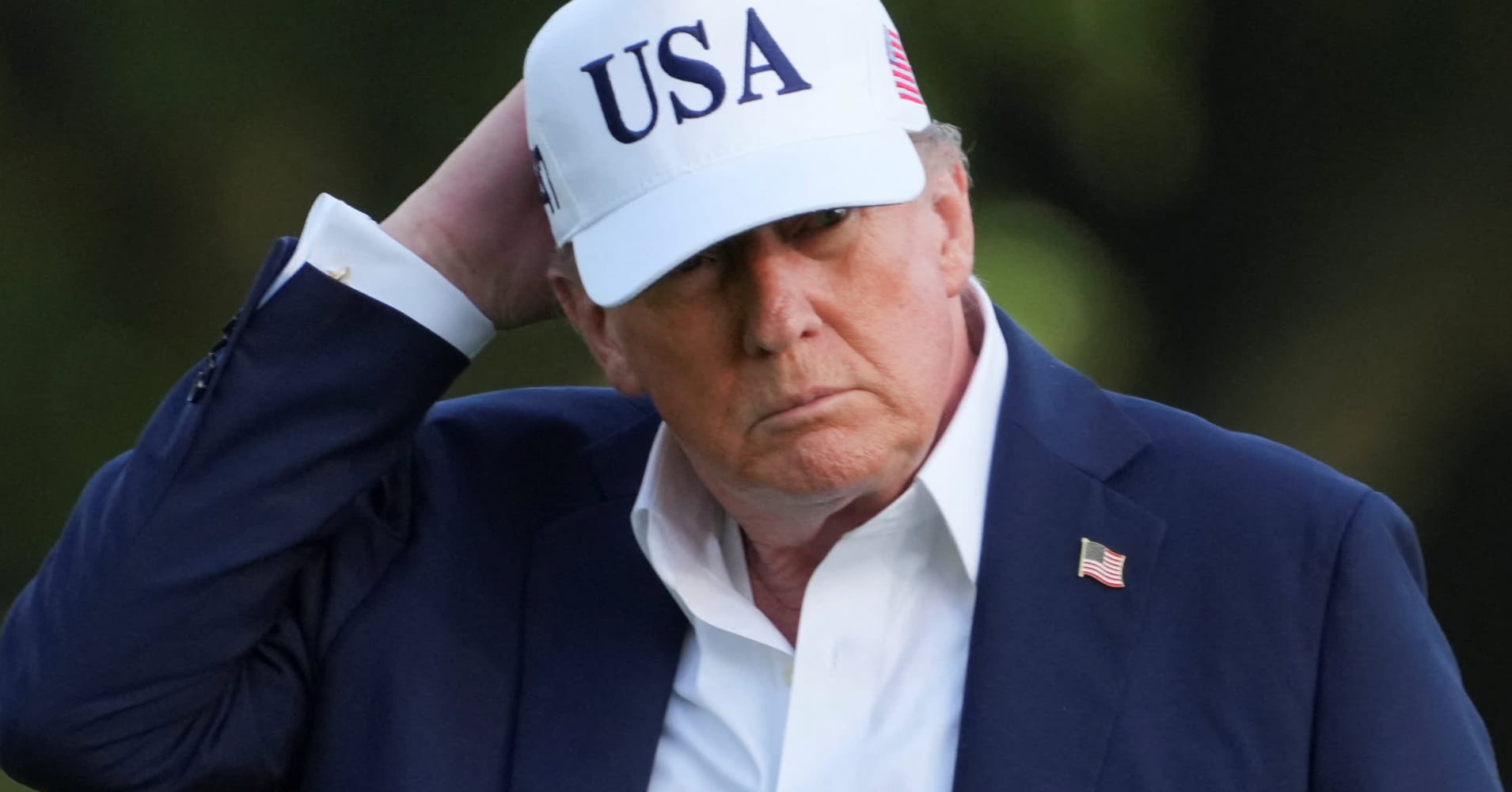
WASHINGTON — President Donald Trump said he's imposing a 25% tariff on goods from Japan and South Korea starting August 1 as the Republican continues his pressure campaign on long-time U.S. allies who have not yet entered into new trade agreements with his administration.

Trump broke the news on July 7 via Truth Social, which is where he posted letters to the leaders of the two Asians economic powerhouses that warn of retaliatory and identical reciprocal increases "If for any reason you decide to raise your tariffs" on the United States.

Other letters from Trump are expected to focus on smaller U.S. trading partners. As many as 100 could be sent in total before July 9 , when the president's pause on higher tariff rates is due to expire. The administration said the rates would take effect on August 1 , if countries did not come to another arrangement with the United States before that time.

Start the day smarter. Get all the news you need in your inbox each morning.

The new date marks a delay of several weeks for the current deadline for the reciprocal tariffs to take effect. Trump unveiled his tariffs in early April, and then paused them after market turmoil. Last week, the president acknowledged that a White House pledge was proving to be complicated, which would see 90 different deals made in 90 days with America's trading partners.

The administration ultimately spent much of the time negotiating with large nations and countries with which it has the most substantial trade deficits. The president and his advisers were also focused on pushing through Congress the massive tax and spending bill Trump signed into law on July 4 .

Trump initially said he would impose higher tariffs on a number of countries on April 2 but paused them until 12:01 a.m. EDT on July 9 for most countries while his administration sought new trade deals. The so-called "Liberation Day" tariffs shook financial markets. They have since recovered, with the S&P 500 and Nasdaq setting new records.

Since then, Trump has announced trade deals with Vietnam and the United Kingdom and a framework agreement with China . He left in place a baseline tariff of 10% on most other nations and also increased tariffs on steel and aluminum imports and introduced exemptions for some foreign-made car parts and automobiles. He also threatened

The president said on July 3 that because the process was easier, he would soon begin sending out regular batches of tariff letters dictating rates to sell products in the United States, rather than negotiating a large number of individual trade deals.

How many deals can you make?" Trump told reporters. "You can make more deals, but they are much more complicated." He added: "It's just so many countries.

Disputes remained with major trading partners such as Canada, Mexico, India and the European Union heading into this week, although the Treasury secretary of Trump said New proposals were flooding in. with less than 48 hours until the July deadline.

As of early afternoon on July 7, the only letters Trump had published were directed at South Korea and Japan, which he hit with roughly the same reciprocal tariff rates as those that had been announced previously.

More letters expected soon

Treasury Secretary Scott Bessent said on CNN's "State of the Union" on July 6 that Trump Would send out letters to 100 smaller countries with which the U.S. does not have much trade, notifying them that they would face the tariff rate set by Trump in April and then suspended.

" President Trump Is going to be sending letters to some of our trading partners saying that if you don't move things along, then on August 1 you will boomerang back to your April 2 tariff level "So I think we're going to see a lot of deals very quickly," Bessent told CNN.

Bessent denied that August 1 was a new deadline for negotiations. "We are saying this is when it's happening. If you want to speed things up, have at it. If you want to go back to the old rate, that's your choice," he told CNN.

Kevin Hassett, who heads the White House National Economic Council, offered some flexibility to countries engaged in sincere negotiations in an interview on CBS's "Face the Nation."

Contributing: Bart Jansen, Joey Garrison

This article originally appeared on USA TODAY: Trump says 25% tariffs coming for Japan and South Korea as trade war escalates again

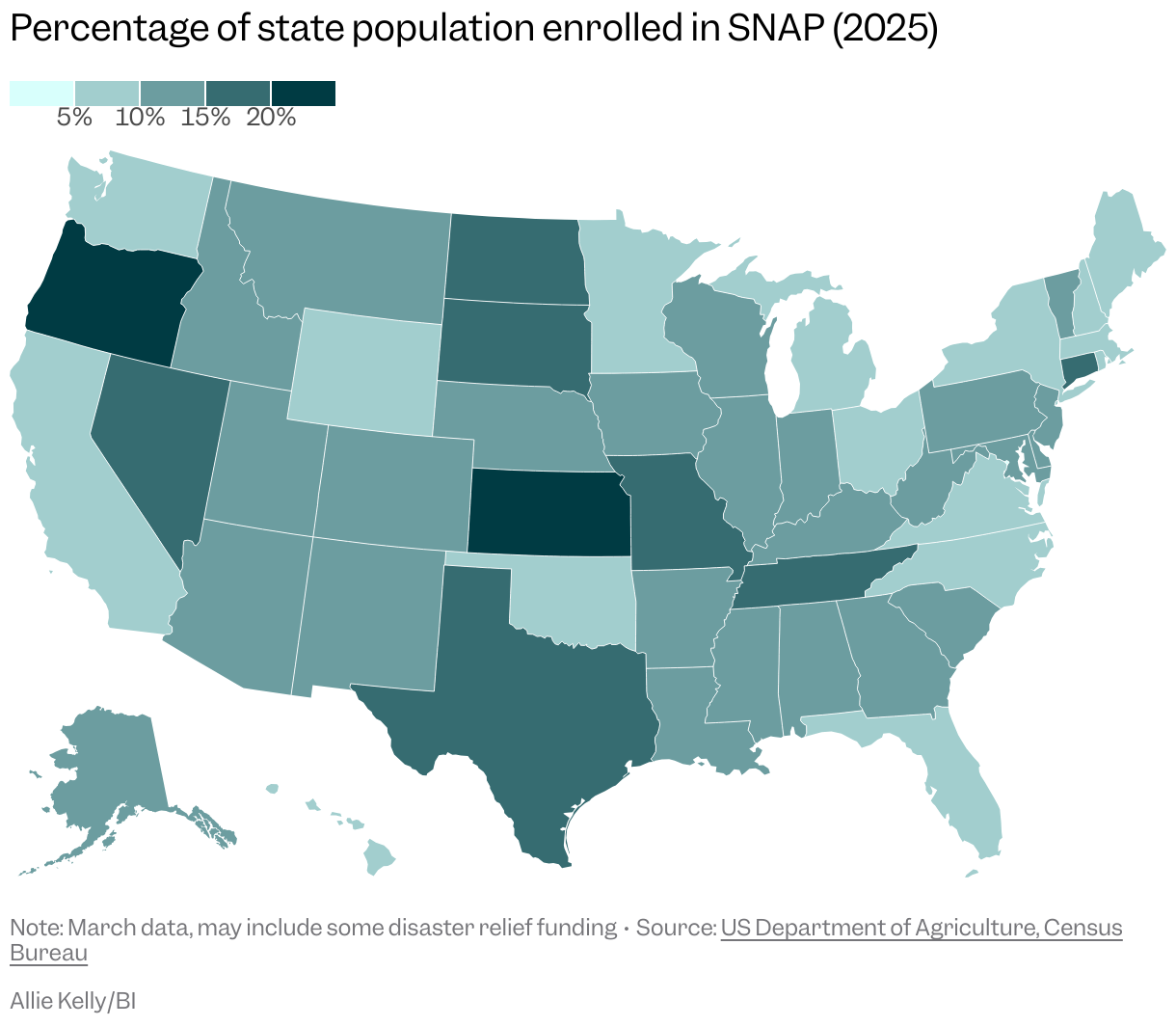
The 'Big Beautiful Bill' cuts food stamps. One map shows how much red states depend on them.

  • Trump's new budget will cut nearly $200 billion from nutrition programs over the next decade.
  • Federal nutrition programs include SNAP, which about 42 million people rely on to buy groceries.
  • Predominantly Republican states with high SNAP enrollment will be hit hardest.

President Donald Trump's "big, beautiful" budget will shrink one of America's largest social safety nets. And it could have a big impact on red states.

The spending plan outlines future funding for a series of federal programs and was signed by the president on Friday, after passing both the House and Senate with overwhelming GOP support . The budget will cut nearly $200 billion from federal nutrition assistance, such as the Supplemental Nutrition Assistance Program — which nearly 42 million Americans rely on it to afford food - over the next decade.

The most significant policy change will require non-disabled adults without dependents to meet work requirements until they reach age 64 in order to qualify for assistance, up from the current cutoff age of 54. The CBO estimated that over 2 million Americans could lose SNAP coverage due to this change.

Some Republicans have defended the legislation , saying that it supports Trump's goal of reducing waste in government spending. It's unclear whether the budget cuts would reduce households' monthly grocery benefits. Still, advocates for the program say less funding and stricter work requirements, along with high grocery prices , will make it more difficult for millions of families to put meals on the table.

In a July 4 statement , US Secretary of Agriculture Brooke Rollins said, "While expanding programs to support the farmers who feed, fuel, and clothe America, this legislation also tackles the fraud and waste that has run rampant in the Supplemental Nutrition Assistance Program (SNAP). The bill holds states accountable for their error rates, strengthens work requirements, and prevents illegal aliens from receiving SNAP."

Undocumented immigrants have long been ineligible for SNAP and other safety net programs, and newly naturalized citizens must wait five years before they qualify for aid. In 2024, the national SNAP error rate (including both over and underpayments) was 10.9%. States with error rates over 6% Will have to begin paying toward federal SNAP costs under the new budget by 2028.

A White House deputy press secretary, Anna Kelly, previously told Business Insider: "President Trump and Republicans are strengthening SNAP so it can be sustainable for generations to come." She added that the spending plan will prevent "waste and exploitation," encourage states to share nutrition program costs with the federal government, and "restore commonsense Clinton-era work requirements."

Republican states could feel the brunt of SNAP cuts

Reducing SNAP could have real consequences for low-income households . While the money cannot be used to buy household goods, it can be a parachute for families who need support affording produce, protein, and other grocery essentials. Monthly SNAP benefits can range from less than $25 to over $1,000, depending on a household's income and number of members.

"We still have birthdays to celebrate," Judith Murray, a parent who receives $1,174 in monthly SNAP for her seven-person family, previously told BI We still have Thanksgiving to do and other holidays. When you see me out there buying a birthday cake with my SNAP benefit card, just try to understand that I don't want to let my little ones down any more than you do.

According to data collected by the US Department of Agriculture, about 12% of Americans were receiving SNAP benefits as of March 2025. In several states that voted for Trump and Republican representatives — such as Louisiana, Oklahoma, West Virginia, and Alabama — that enrollment figure rises up to nearly 18% of the state's population.

This comes as Americans' overall reliance on government aid has been increasing. A 2024 report from the Economic Innovation Group, which analyzed Bureau of Labor Statistics data, said funds from programs like SNAP, Medicaid, and Social Security accounted for about 18% of total personal income a 9-percentage-point increase from 1970 in the US in 2022.

Of course, regional economic disparities are not new, and they do not fall neatly along political lines. Some predominantly Democratic-voting states like Oregon and New Mexico have above-average rates of SNAP enrollment. Food insecurity also isn't an isolated issue: States with high government aid use tend to have higher poverty rates, higher unemployment, and more limited healthcare access. Many of these financial disparities are long-standing and have a more severe impact on people of color and other marginalized communities.

SNAP is also not a perfect system. Americans with low income have told BI that they rely on other resources, including food banks, because their SNAP allocation isn't enough to pay their grocery bills. Others Limit their working hours to ensure their income does not exceed the program's eligibility threshold — which is about $15,000 annually for a single person but varies slightly by state.

As the "Big Beautiful Bill" becomes law, government data shows that Republicans' constituents would feel the impact of any SNAP changes more than those of other political parties. A group of eight GOP representatives, led by Rep. Tony Gonzales of Texas wrote a letter to Johnson in February urging the party leader to advocate for "programs that support working-class Americans."

"While we fully support efforts to eliminate fraud, waste, and abuse, we must ensure that assistance programs - such as SNAP - remain protected," they wrote.

Do you have a story to share? If so, contact this reporter at allisonkelly@newsrealtime or via Signal at alliekelly.10; here is our guide to sharing information securely .

If you enjoyed this story, be sure to follow Business Insider on MSN.

Trump announces 25% tariffs on imports from Japan and South Korea, starting August 1

  • The United States will impose 25% blanket tariffs on imports from Japan and South Korea starting August 1, President Donald Trump revealed.
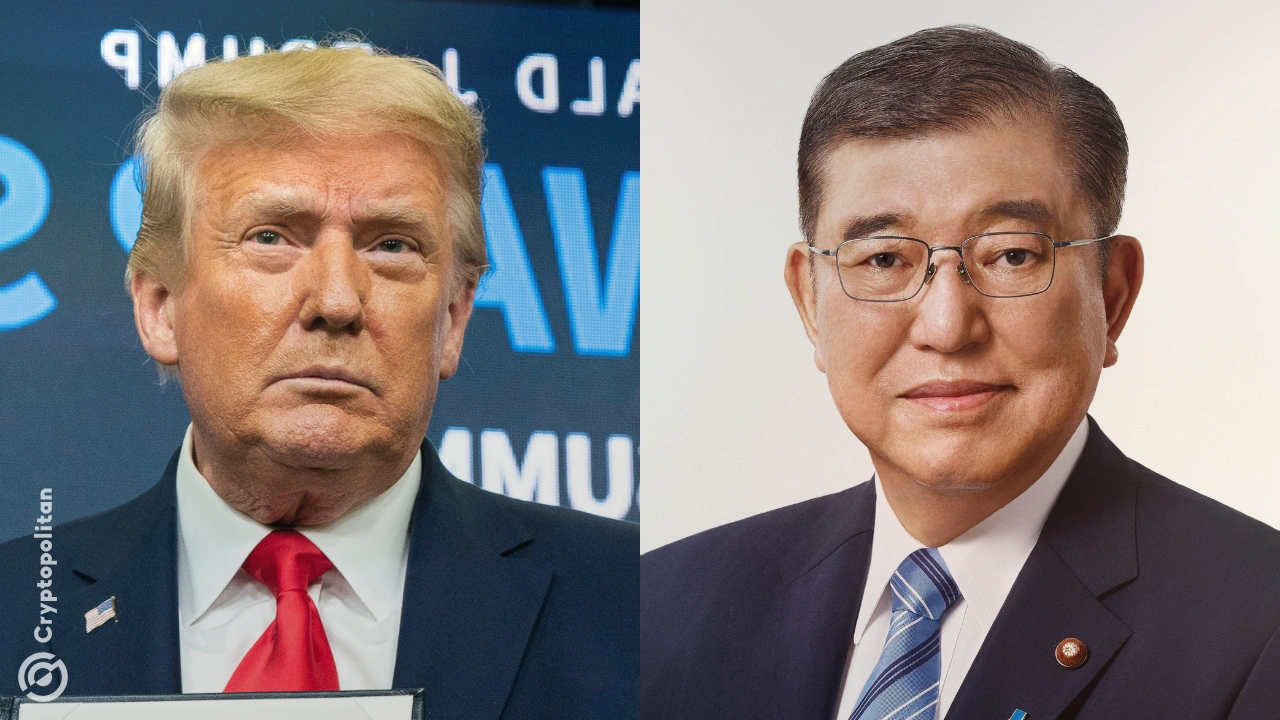
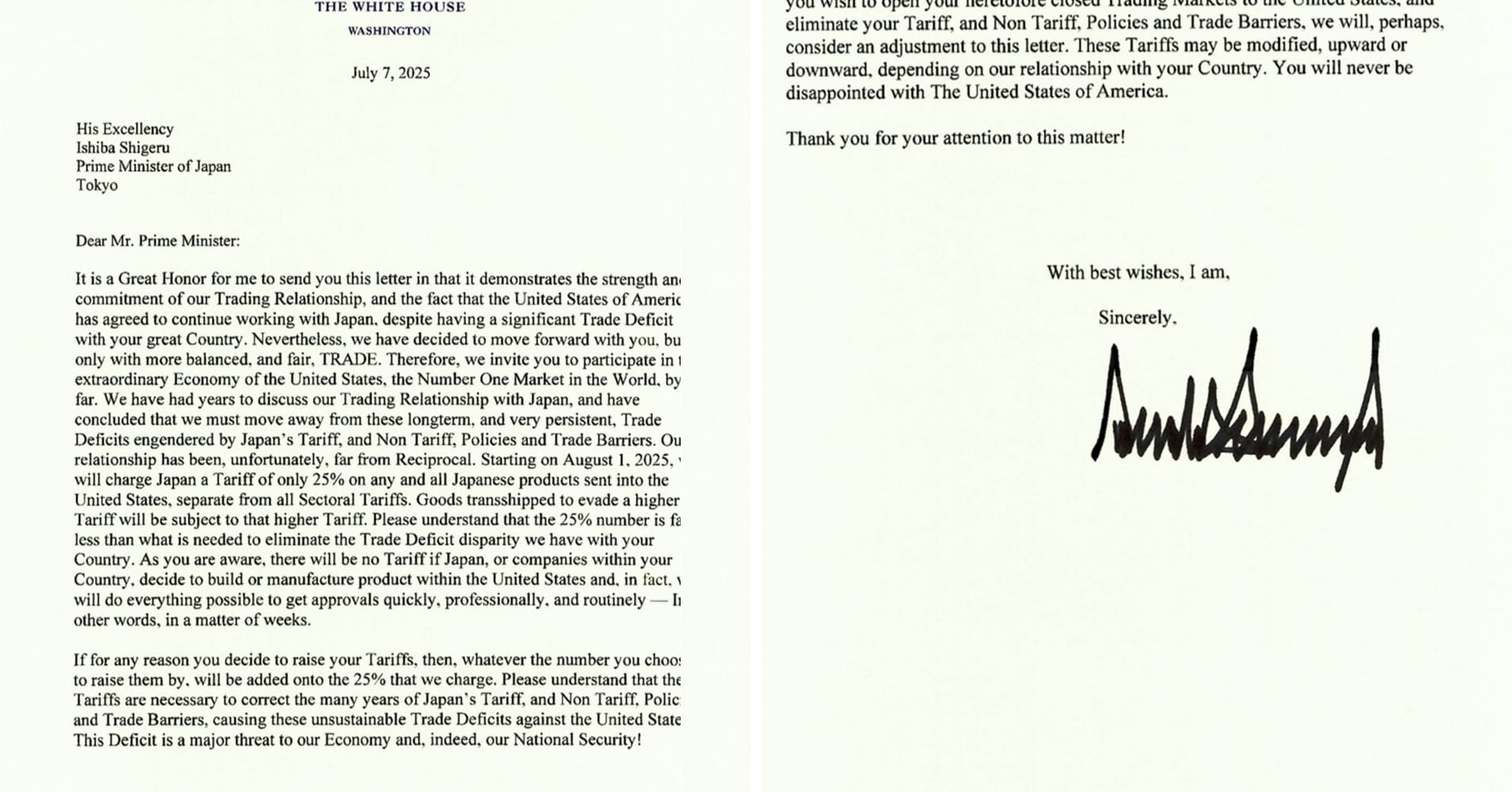
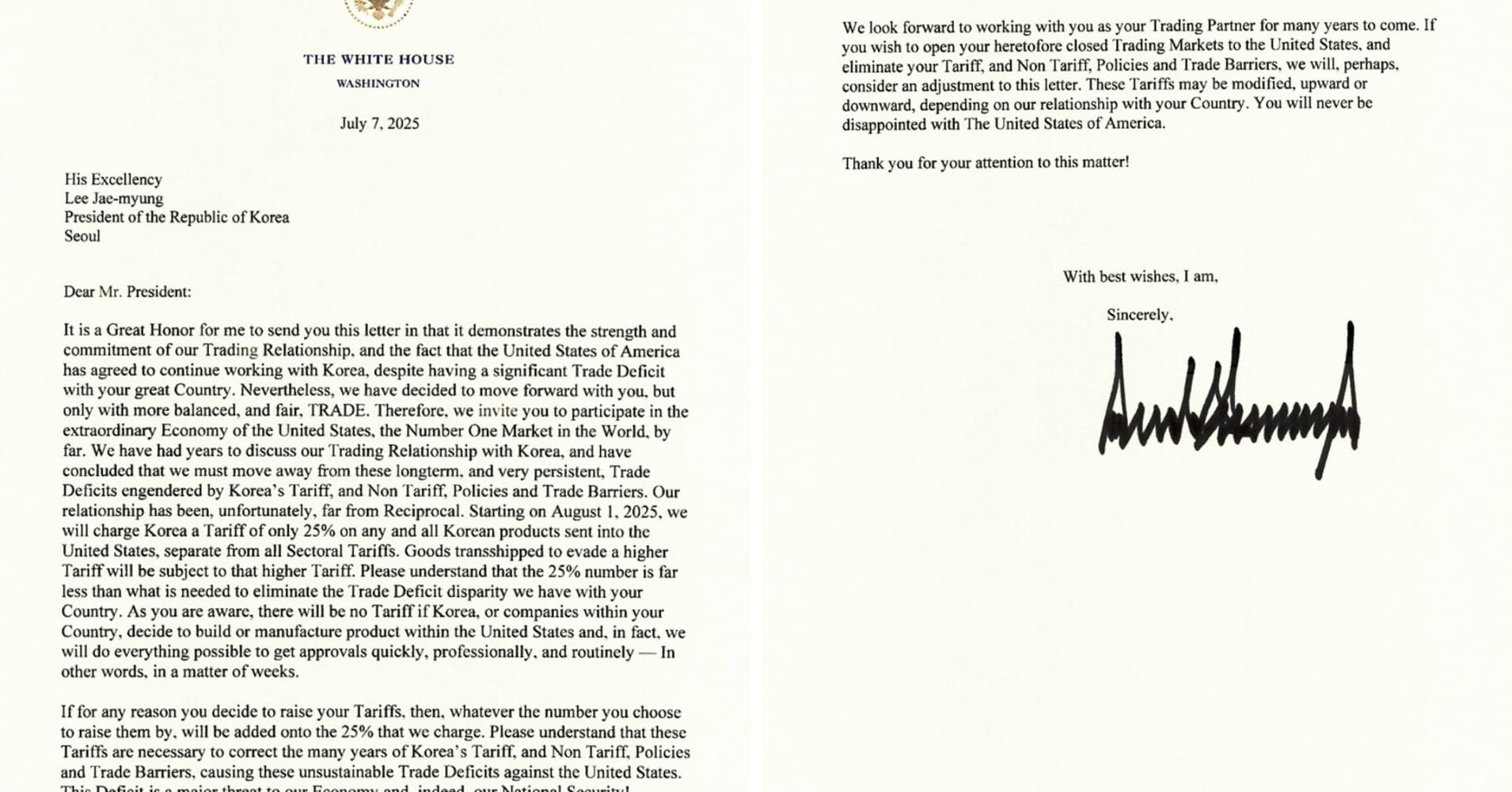
  • Trump shared screenshots of letters apparently sent to Japanese Prime Minister Ishiba Shigeru and South Korean President Lee Jae-myung, specifying the new tariff rates.
  • Both letters state that the 25% tariffs are separate from additional sector-specific duties on key product categories.

The United States will impose 25% blanket tariffs on imports from Japan and South Korea starting August 1, President Donald Trump revealed Monday.

Trump, in a pair of Truth Social posts , shared screenshots of letters apparently sent to Japanese Prime Minister Ishiba Shigeru and South Korean President Lee Jae-myung dictating the new tariff rates.

The two form letters appear to be the first of what Trump said could be as many as 15 letters sent between Monday and Wednesday, the day his so-called reciprocal tariffs on dozens of countries are scheduled to snap back to the higher levels he announced in early April.

Under those initial rates, goods from Japan were assigned a 24% tariff and South Korean imports to the United States were scheduled for a 25% tariff.

Following a chaotic week of losses across global markets, however, Trump issued a 90-day pause on April 9, which lowered the various tariff rates to a flat 10%.

With Monday's letters, Trump is effectively re-imposing his initial "liberation day" tariff rates on two major U.S. trade partners.

U.S. financial markets fell to session lows on news of the letters. The Dow Jones Industrial Average shed 447 points, or 1%. The S&P 500 lost 0.8%, and the Nasdaq Composite dropped 0.9%.

Both letters state that the 25% tariffs are separate from additional sector-specific duties on key product categories.

The letters also note, "Goods transshipped to evade a higher Tariff will be subject to that higher Tariff." Transshipping in this case appears to refer to the practice of transferring goods to an intermediate country prior to their final shipment to the U.S., in order to circumvent tariffs.

The form letters state that the new tariff rates are necessary to correct persistent U.S. trade deficits with the two countries.

Trump, an open supporter of tariffs and a skeptic of free trade agreements, often cites these deficits as evidence that the U.S. is being taken advantage of by its trading partners. Experts have criticized the notion that trade deficits are inherently bad and have questioned whether the U.S. can or should aim to close them.

The U.S. had a $68.5 billion goods deficit with Japan and a $66 billion goods deficit with South Korea in 2024, according to the Office of the United States Trade Representative.

Letters from Monday preemptively warn Japan and South Korea not to respond to the new U.S. tariffs by imposing retaliatory duties on their own imports of American goods.

"If for any reason you decide to raise your Tariffs, then, whatever the number you choose to raise them by, will be added onto the 25% that we charge," the letters say.

They both add that if Japan and South Korea "eliminate" their "Tariff, and Non Tariff, Policies and Trade Barriers," then the U.S. "will, perhaps, consider an adjustment to this letter."

"These tariffs may be modified, upward or downward, depending on our relationship with your Country," they say. "You will never be disappointed with The United States of America."

This is breaking news. Please refresh for updates.

Rabu, 02 Juli 2025

"Not a good bill for higher education": Students would face changes in federal aid under the Senate version

MINNEAPOLIS — Colleges and universities are bracing for change after the massive policy bill passed the U.S. Senate this week, including serious cuts and restrictions to federal student loan programs, expansions to Pell Grants to fund short-term or workforce training, and a new accountability system for colleges based on their graduates’ earnings, ending federal loan eligibility if they fail.

The "One Big Beautiful Bill Act," as it's formally called, also reduces repayment options for student loans, leaving only one income-based option. Loan payments will rise for many borrowers, particularly those with lower incomes.

The bill also allocates $10.5 billion to the Pell grant program, which has been underfunded for years. Pell is a federal initiative that provides financial aid for thousands of the neediest undergraduate students.

“The increase in Pell will help with the anticipated shortfall in Pell funding, making it possible for our students with higher need to continue pursuing their dreams,” said Susan Rundell Singer, president of St. Olaf College in Northfield.

The House still must approve the bill and were debating it late Wednesday. Then President Donald Trump must sign it; he has said previously he wouldn’t hesitate to do so.

The version passed by the Senate "isn't great, but relative to the (original) House bill, it's certainly better in our view," said Justin Monk, director of student and institutional aid policy at the National Association of Independent Colleges and Universities (NAICU).

I want to be crystal clear that this is a relative term," he added. "It is still not a good bill for higher education.

Several higher education leaders said they're happy the bill no longer contains dramatic cuts proposed in the House's initial bill, such as requiring students to take more credits to receive a full Pell Grant — or 7.5 credits per term to get any Pell Grant at all.

"We are glad to see the Senate removed language that would prevent part-time students access to the Pell Grant," said Scott Olson, chancellor of the Minnesota State system, which includes 33 public colleges and universities.

Olson said officials are "still concerned" about the changes that remain in the Senate bill, including eliminating the Grad PLUS loan program and restricting the Parent PLUS loan.

The Parent PLUS loan is now capped, allowing parents to borrow up to $20,000 per year, with a lifetime cap of $65,000 per dependent. The Grad PLUS loan, which was aimed at graduate and professional students, would end next July.

The bill passed by the Senate also sets a lifetime cap of $100,000 for federal graduate student borrowing, or $200,000 for professional school borrowing, on top of existing undergraduate limits. When a student reaches that amount, federal borrowing is discontinued.

These limits are a "sizable reduction" from what was allowed before, Monk said.

Some officials have said that these changes, taken together, may push more families and graduate students toward private student loans, which lack federal protections.

Monk said the loan changes put graduate students who want to enroll in some health programs or the arts in a pickle.

They’re going to run out of money much, much sooner," he said. "And they’ll have nowhere else to go but the private market.

Some people won't qualify for private loans, however, he said.

The result? Many prospective graduate students with lower incomes will simply no longer enroll in certain programs because they have no way to pay for them, meaning the composition of certain fields will change significantly.

(The students) are going to be wealthier," he said. "They're going to have to be.

At St. Catherine University in St. Paul, Lauran Hundshamer, vice president of enrollment, said changes to those two specific loan programs — Grad PLUS or Parent PLUS — would be "difficult" for some students there. They might not be able to pay for college or have to take out higher-interest loans with co-signers.

The House's version had included a "risk sharing" provision that required institutions to be financially responsible for former students' unpaid student loans and calculated financial aid awards based on the median national cost of a degree in a given major.

The accountability system outlined in the Senate bill aims to hold schools—and academic programs within them—responsible for their students' outcomes, with a specific focus on comparing graduates' salaries to those of other state residents who have either high school diplomas or bachelor's degrees four years after graduation.

It's not as bad an idea as the previous House proposals," Monk said, "but it puts programs on the hook for labor market outcomes, which they can't control.

Rundell Singer said she's concerned about this system. Some St. Olaf graduates eventually earn master's degrees in fields such as art, social work, and education.

The bill would end a college or university program's access to federal student loans if, for example, their master's degree graduates are not earning more than the median salary of a working adult with a bachelor's degree in their state.

A university that fails this test for two out of three years would lose access to federal student loans for its students for at least two years.

We need the students that we graduate to go on into the whole range of careers that are out there, including ones that maybe don't have a huge increase in earnings when you get that master's degree," Rundell Singer said. "It's a societal issue — it's thinking about higher ed as a public good.

Republicans and Democrats in both the U.S. House and Senate favored allowing students to receive Pell grants toward workforce training programs, which are typically shorter in length than degree or certificate programs.

This change would make more students eligible for Pell grant awards, such as those enrolled in programs that award certificates or licenses.

Allowing Pell grants to be used for short-term workforce programs is a "great idea," but students served by Wallin Education Partners, a Twin Cities nonprofit that provides scholarships and advising to college-bound, low-income students, all attend two- or four-year nonprofit institutions. It appears many of these shorter training programs are offered by for-profit institutions, said Mohamed Sallam, Wallin's CEO.

Some higher education officials worry that allowing Pell eligibility for this kind of training could lead students to enroll in low-quality programs.

Monk, from NAICU, said letting these programs access Pell money concerns him. Any program that's been around longer than a year and has a 70% completion rate can access the funds, Monk said. They must also have a 70% placement rate 180 days after graduation.

There's 'limited evidence that short-term programs have any benefit to graduates,' he said.

One report has shown that such programs offer no increases in employment or earnings, he said. But he added that there's limited data on outcomes because reporting them often hasn't been required.

We don't know how it's going to play out," he said. "While we find that out, they're going to be using the Pell grant program as a bit of a piggy bank.

_________

©2025 The Minnesota Star Tribune. Visit startribune.com. Distributed by Tribune Content Agency, LLC

Senin, 23 Juni 2025

How Russia's overcooked war economy might get a boost if the Iran conflict sends oil prices even higher

  • The climb in oil prices stemming from the Israel-Iran conflict could end up boosting Russia's economy.
  • US and international oil prices surged following US attacks on Iranian nuclear sites.
  • Russia would likely welcome the boost to crude prices, as oil is the nation's top export.

Oil prices spiked in the wake of the US entry into the Israel-Iran conflict, a development that could give a much-needed boost to Russia's war-weary economy.

Brent crude , the international benchmark, traded around $76 on Monday, a day after the The US bombed nuclear sites in Iran. That's up 14% from its price on June 12, the day Israel first targeted Iran's military leaders. nuclear program Brent prices have climbed 26% from their low in early May.

West Texas Intermediate crude traded around $74 a barrel, up 9% from the day of Israel's first attack. WTI prices are up 30% from their low last month.

The price of Urals oil , Moscow's flagship crude blend also rose to around $63 a barrel on June 13, up 8% from its price on May 1, according to data from Argus Media cited by Bloomberg.

A report from The Institute for the Study of War flagged the positive knock-on effects on Russia's economy , with oil being Moscow's top export — and the revenue that the Kremlin brings in from its energy trade is a key lifeline for its war effort in Ukraine.

Russia put its economy on a war footing After the full-scale invasion, with President Vladimir Putin taking steps to increase the production capacity of the country's defense industry.

The production of key weaponry, such as highly destructive glide bombs, drones, and missiles, has increased since the start of the war. Russia has also raised contract bonuses and soldier pay to expand its invasion force to up to 600,000 troops.

Continued rising oil prices following Israeli strikes against Iran may increase Russian revenue from oil sales and improve Russia's ability to sustain its war effort, but only if the price of oil remains high and if Russian oil "does not come under additional international sanctions," the think tank said in a report last week, before the US entered the conflict over the weekend.

Armed conflict between Israel and Iran — which the US <failed> on Saturday — also jeopardizes the Strait of Hormuz, a highly important passage for oil shipments in the Middle East.

Russia is less reliant on this key transit route. The country has pivoted to selling its oil to Asian customers after getting hit with Western sanctions. sanctions , and has rerouted more of its oil through the Suez Canal and the Strait of Malacca, according to the Energy Information Administration .

"As long as the Straight remains at risk, political appetite for additional sanctions on Russian oil will remain low," The Royal United Services Institute, an independent British research institution, wrote in a note.

The jump in oil prices comes at a pivotal time for Russia's economy, which has been bearing the cost of its war against Ukraine for over three years.

In May, the nation said it would pull out another $5.5 billion from its liquid reserves to balance the budget deficit, which tripled in 2025.

Russia's oil and gas revenue also dropped 35% year-over-year that month.

According to the nation's Finance Ministry, the liquid assets in Russia's National Wealth Fund stood at 2.8 trillion roubles, or around $35.7 billion, in May. Calculations by Bloomberg show that's down 68% since the start of the Ukraine War.

Meanwhile, the Trump administration's months-long efforts to bring Russia and Ukraine to the negotiating table for peace talks appear to be going nowhere. Kyiv has denounced Putin's terms as effectively amounting to an unacceptable capitulation.

If you enjoyed this story, be sure to follow Business Insider on MSN.