

Columbia has a proposed $558 million revenue budget for the fiscal year 2026. This is approximately a $20 million increase from 2025.
The third in a series of budget work sessions was held by the Columbia City Council on Saturday, July 19.
It looked at what the budget looks like, any new decision items, which can include staff positions that are not in previous year budgets and where cuts are occurring. Other new decisions are items like new equipment and materials.
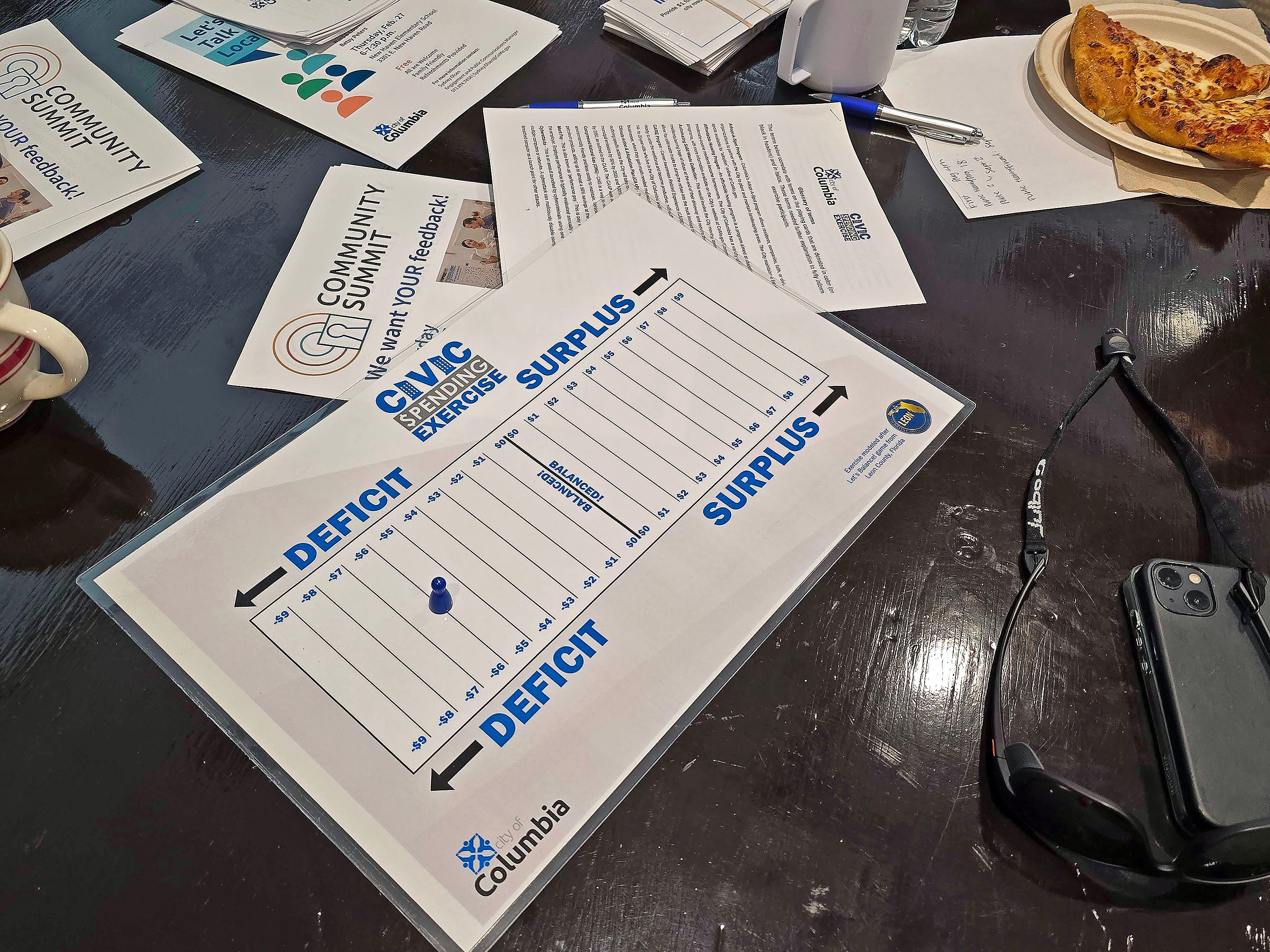
The city will hold town hall meetings on the city budget at 11:30 a.m. and 5:30 p.m. on August 11. This is an opportunity for the community to provide feedback, along with budget public hearings at regular city council meetings at 7 p.m. on August 18, September 2 and September 15.
Proposed expenses are about $598 million. This includes capital projects for which revenue was accumulated over several years, but is spent in fiscal year 2026, explaining the apparent deficit budget.
Employment and cuts
While higher expenses over revenue is not always an indicator of a deficit budget, Finance Department Director Matthew Lue has previously said that is starting to be the case in 2026 . So, city staff have looked where expense cuts can happen that do not impact personnel, especially following the classification and compensation upgrades within the last couple of years.
This has included materials and supplies cuts, travel and training cuts, and intragovernmental charge cuts. For city staff positions that are not filled by Oct. 1, the city will not start to fill these until Jan. 1, providing about a three-month savings from those positions.
The majority of overall expenses goes toward providing utility services. The next are transportation and public safety. Drilling down further, this includes paying employees, providing city services and providing the power supply, among other pieces of that pie.
The city is proposing 19.5 new positions (full/part time), mostly in police, health, parks and utilities departments, according to a staff presentation document. There were a total of nearly 100 new positions, so 76.75 of the positions were not approved. This included 51 police officer positions.
Even though the positions are considered not approved, the city administration still can review and make adjustments as the year progresses. The police department was well aware that an ask of 51 officers was something likely not to receive approval, but wanted to provide the requested number to the city council anyway, said Chief Jill Schlude. The request is where the department would like to get to as years progress.
City human resources and the police department meet weekly to fill positions in the department. Similar discussions take place with other departments.
Various city funds
An exploration of city fund accounting and sales taxes was explained to council members. Much of how the city is funded is through a general sales tax and more specialized sales taxes .
The city allocates its resources into various funds with specific purposes, restrictions, and legal requirements. The city also has special revenue funds, which are also funded by sales taxes, like those for parks, but these have even stricter limitations on how the money from these funds can be used. Therefore, money designated for a playground cannot be used for a street project, for example.
The city has a public improvement fund. A portion of the city's general fund was traditionally put into this fund. The plan for 2026 is not to make that fund transfer as a means of keeping a balanced budget, as expenses are starting to outpace revenue. While sales and use tax will not go into the fund, development fees as part of the permitting process for private development and investment revenue will still go into the fund in 2026.
Expenses from the public improvement fund include public art maintenance, storm water maintenance, and a streets project, specifically the Forum Boulevard lane additions from Chapel Hill Road to Woodrail Avenue. This project uses development fees, which can only be used for projects like the Forum Boulevard expansion, said Shane Creech, Public Works director.
While the city has an overarching umbrella of capital projects, the city's capital improvement sales tax goes to Public Works and public safety purchases, such as police vehicles and the development of fire station 10 and the replacement of fire station five on Ballenger Lane. The 50-year-old-plus station is sinking into the ground.
The city, as it is moving forward, plans to include maintenance cost funding into CIP tax related projects.
Other funds reviewed included convention and visitors bureau, community development block grants and HOME, Mid-Missouri Solid Waste Management District, contributions, debt service for paying back bonds (including refund bonding, which is similar to a refinancing of debt), internal service funds when one department assists another, employee benefits, self-funded insurance, fleet operation, utilities, information technology and vehicle replacement.
Departments contribute the cost of vehicle replacement into this fund over time, and then they are purchased through this fund, so vehicles in the city's fleet are on a replacement schedule," Lue explained. This was established in 2023.
Answering other questions
In meetings earlier in the week, the council had questions about electric rate increases and their impacts, whether or not implemented.
Changes to water rates following a cost of service study mean the city could increase its water revenue by 12%. That is not the rate increase. Utilities is proposing a base fee increase of 25 cents for most residential consumers, and then the usage rates, which will still be tiered based on average winter usage. The tier prices could actually mean a reduction in utility bills, at least for water.
Without a rate increase, the utility will run out of money to operate. The rate increase and resulting revenue increase will mean a balance between revenue and expenses as years progress.
The city proposed a 2% revenue increase for electricity for 2026 only. Doing this postpones the utility going into the red until 2030. If the city were to do 2% annual increases, it would build up the cash reserves year over year. While the council is not likely to approve the 2% increase each year, it can review if the city proposes any changes for the fiscal year 2027.
The city continues to promote its various energy efficiency programs and options. When the city updates its utility rates, people have changed their usage behaviors, but that is more of a predict and check every five years in line with cost of service studies, city staff said.
This article originally appeared on Columbia Daily Tribune: How the city of Columbia is finalizing its proposed 2026 budget