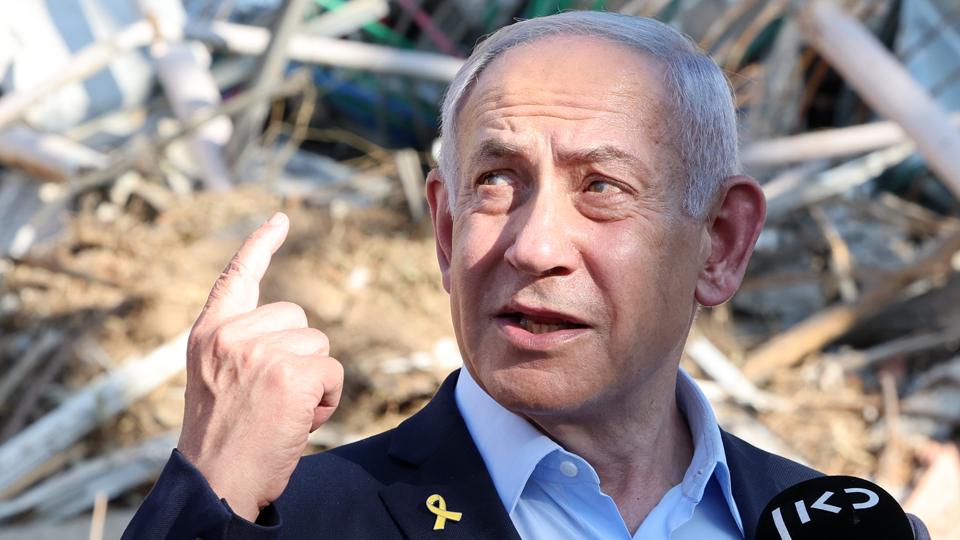
In March, as he turned his back on a ceasefire process that was delivering results, the Israeli prime minister made a decision described by some commentators as akin to "political suicide."
The Gaza ceasefire deal, brokered by Donald Trump's envoy Steve Witkoff even before the US president was inaugurated to his second term, had led to the release of dozens of hostages from Hamas captivity, in exchange for hundreds of Palestinian prisoners from Israeli jails.
The next stage was supposed to see more hostages return home and a gradual withdrawal of Israeli troops from Gaza, followed by a negotiated end to the war.
Tired of conflict, Israelis and Palestinians contemplated the end of the most destructive war in a shared history too frequently punctuated by fighting.
But Benjamin Netanyahu didn't want the war to end.
As he ordered the resumption of attacks across Gaza, the prime minister declared that the fighting would continue until Hamas had been "completely destroyed."
The safe return of the remaining hostages in Gaza seemed to be a secondary consideration. (The civilian consequences in Gaza itself didn't merit a mention.)
Many Israelis, especially the hostage families, were outraged.
They accused Netanyahu of prioritizing his own political survival over the safety of their relatives and the greater good of the nation.
"Bibi's" popularity in the polls plummeted, and he struggled to keep together a disjointed government, propped up by hardline ministers from the far right and orthodox religious parties.
Three months later, Netanyahu is basking in the glory of a spectacular military victory over his nemesis, Iran. He is now said to be contemplating early elections and yet another term as prime minister.
At a press conference earlier this week, the 75-year-old, who is already Israel's longest-serving leader, said he still had "many missions" to complete and would seek to do so for as long as "the people" of Israel want him to.
Later in the week, presenting the presumed destruction of Iran's nuclear program as a "window of opportunity" that "must not be missed," Netanyahu suggested that only he could secure the "release of hostages and the defeat of Hamas," after which he would pursue broader regional agreements.
But calling early elections would be a big risk, and according to the latest polls, Netanyahu hasn't enjoyed as big a "bounce" from the 12-day conflict with Iran as he might have hoped for.
Trust
In a fractured political system where coalition building is key in the 120-seat Knesset, Netanyahu's Likud Party would fall well short of a majority by itself and could struggle to pull together support from smaller parties on the right, suggests latest polling in the Ma'ariv newspaper.
The same polling suggested a significant majority, 59% of Israelis, want the fighting in Gaza to stop now, in exchange for the hostages.
Nearly half of those surveyed, about 49%, also believed that the sole reason Netanyahu continues the war is for his own political gain.
"The guy is a very skilful political actor," says Professor Tamar Hermann, a senior Research Fellow at the Israel Democracy Institute. "There is no more skilled politician in Israel."
But, he says, "trust" is a big problem for Netanyahu.
A political leader who has changed his spots so many times to cling to the reins of power is simply no longer believed by a majority of Israelis.
According to new polling, soon to be released by Prof Hermann's Israel Democracy Institute, Netanyahu "doesn't cross the 50% line in terms of Israelis expressing full or even partial trust in him".
In some ways, says Prof Hermann, deciding to call early elections 'is an even greater risk [for Netanyahu] than attacking Iran because in the Middle East you really don't know where you will be in six months'.
That's because, despite his military gamble in Iran seemingly paying off, there's an elephant in the corner of Benjamin Netanyahu's living room.
Indeed, you could say a small herd of elephants is threatening to disrupt the prime minister's hopes of yet another term in office.
Corruption charges
Next week, he is due to testify in a high-profile criminal case in which he's facing charges of political corruption, including bribery and fraud.
The prime minister's attempts to, again, delay the High Court hearings on account of his busy schedule and the special state of emergency (over the Iran war) were rejected at the end of last week.
Netanyahu and his supporters have repeatedly tried to portray the legal case against him as part of a "politically driven witch hunt," but in an increasingly polarized society, his opponents are equally determined that he should face justice.
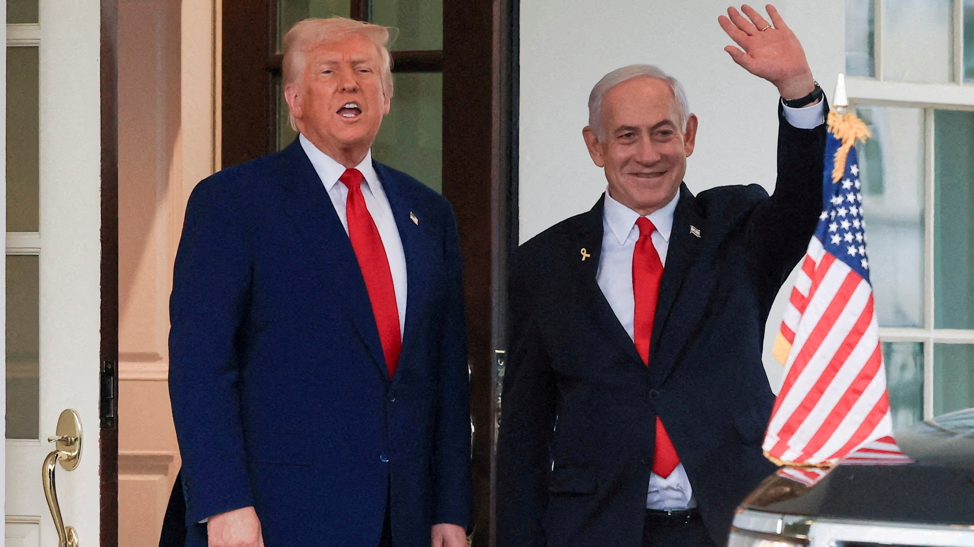
Appearing to belatedly learn about "Bibi's" legal troubles, President Trump said Netanyahu was a "great hero" and "warrior" whose trial should be "cancelled immediately" or, at the very least, he should be given a pardon.
This, remember, is the same U.S. president who only days earlier had publicly castigated the Israeli prime minister – with expletives – as the Iran ceasefire deal threatened to unravel before it had begun.
But Trump's latest intervention has been described as unwise and unhelpful by many in Israel.
Opposition leader Yair Lapid said he should not "intervene in a legal process of an independent state".
His apparently contradictory stance on Israel and attempted intervention in Netanyahu's legal case was akin to "treating us like a banana republic", says Prof Hermann.
On the international stage, many Israelis accuse Netanyahu of having harmed Israel's global standing and its economic prospects by needlessly prolonging the war in Gaza, even though many former generals have said the Israel Defense Forces (IDF) has achieved as much as is militarily possible in Gaza.
It should not be forgotten, either, that the International Criminal Court still has warrants issued against the prime minister - and former defense minister Yoav Gallant - over alleged war crimes and crimes against humanity in Gaza, where more than 55,000 people have been killed in Israel's war against Hamas.
Israel's government, along with Netanyahu and Gallant, strongly rejects the accusations.
Ultimately, say most commentators, it would be difficult to imagine new elections being called in Israel while the war in Gaza continues and while Israeli hostages remain captive.
But many of Netanyahu's critics and opponents have prematurely written him off over the years and have certainly learned never to second-guess what his next move might be.
-
Trump calls for end to Netanyahu corruption trial
-
What we know about the Iran-Israel ceasefire
-
When Iran's supreme leader emerges from hiding, he will find a very different nation.