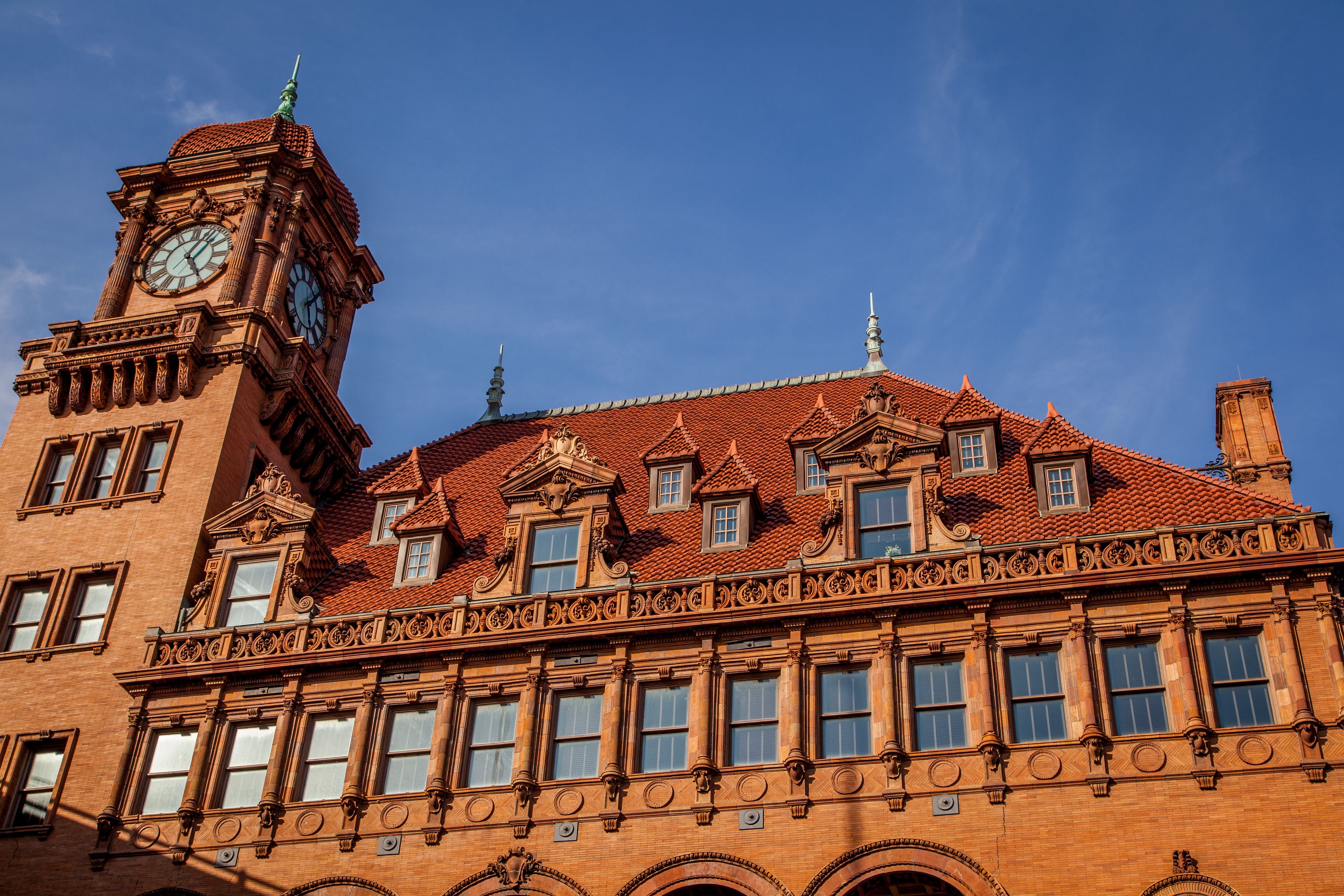
As of recent reports, Amtrak's North Carolina and Virginia stations are the busiest in the U.S. , and with the two states being in the South, this proves how vital the region is to the rail network. With these two seeing high ridership and even having plans for further expansion of service, it's easy for some Amtrak stations, no matter how historic or beautiful, to be overlooked. Though it stands in plain sight in the heart of Virginia's capital, Main Street Station is one of the most beautiful and underrated Amtrak stations in the South. Behind this station's ornate Beaux-Arts façade lies a story of resilience, reinvention, and remarkable design.
Similar to this underrated yet beautiful Amtrak station in America which had its fair share of setbacks, over the decades, Main Street Station survived floods, fire, neglect, and the near-collapse of American rail travel, only to rise again, restored to its original grandeur. Today, it serves as a gateway for travelers and a symbol of Southern elegance, architectural brilliance, and historical endurance. This article explores why Richmond's Main Street Station deserves far more recognition.
Amtrak's Architectural Gem In The South
With its soaring clock tower, red terracotta roof, and French Renaissance Revival styling, Richmond’s Main Street Station deserves a place among the most beautiful train depots in the United States. The station’s exterior features refined details such as arched windows that line its red brick façade. These windows allow sunlight to pour through during the day, giving the building a warm, lantern-like glow at night. The majestic clock tower, visible from Interstate 95 and several neighborhoods, also serves as a visual compass and landmark.
One of the station's unique features is its elevated train shed. Spanning several tracks, it is one of the largest remaining train sheds of its kind in the U.S. and was considered an engineering feat when it was constructed. Unlike many stations where platforms are pushed to the outskirts, Richmond's train shed is built above the street-level building. The station's layout also merges with the urban topography of Shockoe Bottom, a historic neighborhood once central to Richmond's commerce and now home to restaurants, galleries, and restored warehouses.
Main Street Station in Richmond, VA
Inside, the artistry continues with high ceilings, exposed ironwork, and expanses of marble and tile that pay homage to the building’s original 1901 design. The main passenger halls strike a balance between function and form, providing waiting areas where travelers can relax and appreciate the architecture. Despite its beauty, Main Street is often overshadowed by the nearby Richmond Staples Mill Road Station (RVR), which, according to Axios Richmond , served over 424,000 passengers in 2023.
The Gilded Past Behind Richmond’s Main Street Station
Built in 1901, Main Street Station was part of a larger movement during the golden age of American railroads, when trains powered local economies and symbolized progress. Richmond, with its historical roots and location between North and South, needed a station that reflected its ambition, and Main Street Station fulfilled that vision. Designed in the Beaux-Arts style and credited to the architectural firm Wilson, Harris, and Richards, the station echoed Europe's architectural sophistication, especially the grandeur of French civic buildings. Its elegant red brick façade, soaring arched windows, and iconic clock tower made it a visual landmark in Richmond's evolving skyline.
From the beginning, the station played a pivotal role in connecting Richmond, one of the historic cities in the U.S. , to the rest of the country. It served as a major stop for the Chesapeake and Ohio Railway and the Seaboard Air Line Railway, two major rail networks that transported passengers and freight across vast distances. From this hub, travelers could journey north to Washington, D.C. and New York, or head south toward Raleigh, Savannah, and beyond.
The station’s location in Shockoe Bottom, near the James River, made it vital to the city’s transportation network but also left it vulnerable. In 1972, floodwaters from Hurricane Agnes severely damaged its lower levels, while fires in 1976 and again in 1983 caused further destruction. Meanwhile, as car and air travel became dominant in the mid-20th century, passenger numbers dropped, and by the 1970s, Main Street Station was closed. That might have been the gem’s end, but thanks to preservation efforts, Main Street Station had already been added to the National Register of Historic Places in 1970 .
In the early 2000s, the station underwent a major multi-million-dollar renovation, reopening in 2003 after decades of decline. The restoration aimed to preserve its character while updating it with modern infrastructure like sprinkler systems, elevators, climate control, and more. Further updates since then have included new lighting, digital signage, and accessibility improvements. Still, much of its visual identity has remained untouched, allowing visitors to experience the station largely as it looked over a century ago.
This Amtrak Station Is A Functional Train Hub For Modern-Day Travelers
Main Street Station may be steeped in history, but it is not stuck in the past. Today, this historic station serves as an active Amtrak station on the Northeast Regional line , offering direct routes to major cities such as Washington, D.C., New York City, Philadelphia, and Boston. For those arriving or departing by other means, local transit connections are strong. The station is serviced by GRTC’s Pulse Bus Rapid Transit line, which runs east to west through Richmond’s core. Bike-share docks, rideshare access, and ample parking nearby make it convenient for residents and out-of-town visitors. Once inside, passengers enjoy comfortable waiting areas, free Wi-Fi, modern restrooms, and digital arrival boards.
In addition to functioning as a transit hub, Main Street Station provides a venue for the local community The upper levels of the station are often used for weddings, conferences, and cultural events. The station's vaulted ceilings and historic architecture have made it a go-to venue for art exhibits, historical showcases, and even public policy meetings.
There are also efforts to expand the station's capacity. In recent years, the Commonwealth of Virginia has invested in future rail expansion , including improvements that could bring higher frequency and more reliable service through Richmond. Although Main Street currently sees fewer passengers than Staples Mill Road, its strategic downtown location and proximity to attractions and institutions make it a perfect choice for long-term growth. Main Street Station is just a short walk from key attractions in Richmond, such as the Canal Walk, the Virginia State Capitol, and the historic cobblestone streets of Shockoe Slip. This kind of walkability makes it easy for travelers to explore before or after a train ride without needing a car.
With its beautiful architecture, deep historical roots, and modern functionality, Main Street Station is one of the South's most underappreciated train stations. For those willing to look beyond the usual travel hubs, this station offers a rare combination of beauty, historical depth, and exceptional services.




0 komentar:
Posting Komentar